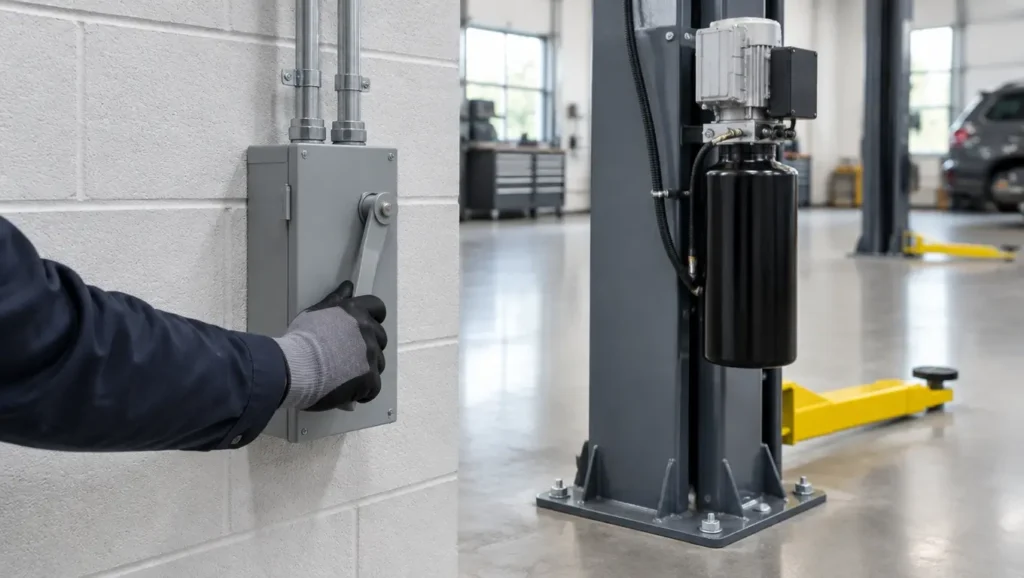
Most full-rise 2-post lifts need 240 V, single-phase, 60 Hz power on a dedicated circuit. A typical 3 HP power unit draws about 12 to 13 A while lifting, and most installations use a 30 A two-pole breaker with 10 AWG copper wire. Always confirm the breaker size in your lift manual.
The breaker is bigger than the running current on purpose. The electrical code sizes motor circuits from a table value, not the label, and allows room for the surge when the motor starts. The lift also needs a disconnect within sight of the power unit. Industry reporting puts a new dedicated 240 V circuit near the panel at roughly $300 to $900. Long runs and sub-panels cost more.
The 2 post lift power requirements are the part of an install people plan last. That's backwards. The slab decides whether the lift can stand, but the panel decides whether it can move. Finding out on install day that the panel is full, or 90 feet from the bay, costs time and money.
This guide covers the electrical side of a 2-post lift: what the data plate tells you, why the breaker is larger than the amp draw, how wire size and run length interact, what single-phase and three-phase mean for your shop, and what to hand your electrician for an accurate quote. It's written for shop owners, fleet managers and serious home-garage builders in the US and Canada.
What we cover here is planning information, not wiring instructions. Circuit work on a lift belongs to a licensed electrician working under your local code.
Key takeaways
- 240 V single-phase is standard. Six of Daytona's seven 2-post lifts run on 240 V, 1PH, 60 Hz with a 3 HP motor.
- Running amps are not breaker size. A 12 to 13 A draw usually still means a 30 A two-pole breaker, per the manual.
- Code sizes from a table. The NEC sizes motor wiring from 17 A for a 3 HP, 230 V motor, times 125%. That comes to 21.25 A, which is more than a 20 A circuit.
- Dedicated circuit. Don't share the lift circuit with a compressor, welder or heater.
- Disconnect in sight. The lift needs a lockable disconnect or plug within sight of the power unit.
- Distance drives cost. Run length and panel capacity move the price more than the lift model does.
- Phase matters in older shops. 208 V three-phase buildings need a motor rated for 208 V operation.
What are the 2 post lift power requirements?
A typical full-rise 2-post lift needs a dedicated 240 V, single-phase, 60 Hz circuit, usually protected by a 30 A two-pole breaker, with a disconnect within sight of the power unit.
That supply feeds one hydraulic power unit, mounted on the primary column. The motor runs only while the lift rises. Lowering is by gravity through a valve, so the circuit carries a heavy load for about a minute per lift cycle, then almost nothing. That short, heavy load is why lift circuits look oversized on paper.
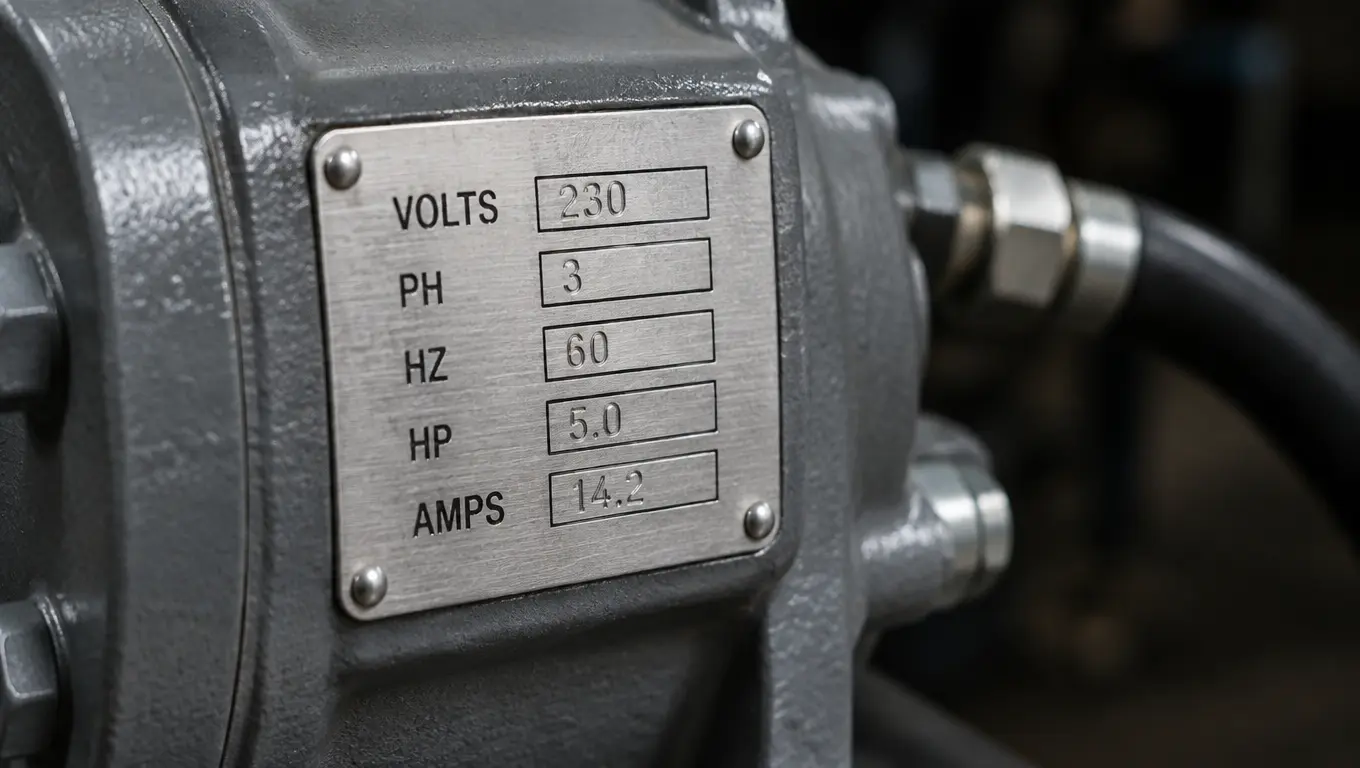
Five numbers matter: voltage, phase, frequency, horsepower and full-load amps. All five are on the power unit data plate and in the installation manual. If the plate and the manual disagree, stop and call the manufacturer before anyone pulls wire.
What power do Daytona 2-post lifts need?
Every Daytona full-rise 2-post lift uses 240 V, single-phase, 60 Hz power with a 3 HP motor drawing 12 to 13 A. The LTPP6 parking lift runs on 110 V.
| Model | Capacity | Type | Voltage / phase | Motor | Rated amps |
|---|---|---|---|---|---|
| BR10-2OH-33 | 10,000 lb | Overhead, ALI Certified | 240 V / 1PH / 60 Hz | 3 HP | 12 A |
| LTPO15 | 15,000 lb | Overhead | 240 V / 1PH / 60 Hz | 3 HP | 13 A |
| LTPA12 | 12,000 lb | Adjustable | 240 V / 1PH / 60 Hz | 3 HP | 13 A |
| LTPA10 | 10,000 lb | Adjustable | 240 V / 1PH / 60 Hz | 3 HP | 13 A |
| LTPF12 | 12,000 lb | Floorplate | 240 V / 1PH / 60 Hz | 3 HP | 13 A |
| LTPF9 | 9,000 lb | Floorplate | 240 V / 1PH / 60 Hz | 3 HP | 13 A |
| LTPP6 | 6,000 lb | Parking (2-post) | 110 V / 1PH / 60 Hz | See spec sheet | See spec sheet |
Capacity and arm style don't change the electrical supply across our full-rise range. A 9,000 lb floorplate and a 15,000 lb overhead need the same circuit, so the choice between them comes down to ceiling height and bay layout. Our 2-post car lift buyer's guide covers that decision, and the full range is on the 2-post lifts page.
What should you check before calling an electrician?
Check four things in order: the Plate, the Panel, the Path and the Point. Each one answers a question the electrician will otherwise ask on site.
Plate
Read voltage, phase, frequency, horsepower and full-load amps from the power unit data plate. Photograph it. This settles the circuit before anyone guesses.
Panel
Open the panel door and photograph the breakers and the main breaker rating. You need two free adjacent spaces for a two-pole breaker, and enough spare capacity for the load. A 100 A home panel already feeding a range, dryer and heat pump may not have it.
Path
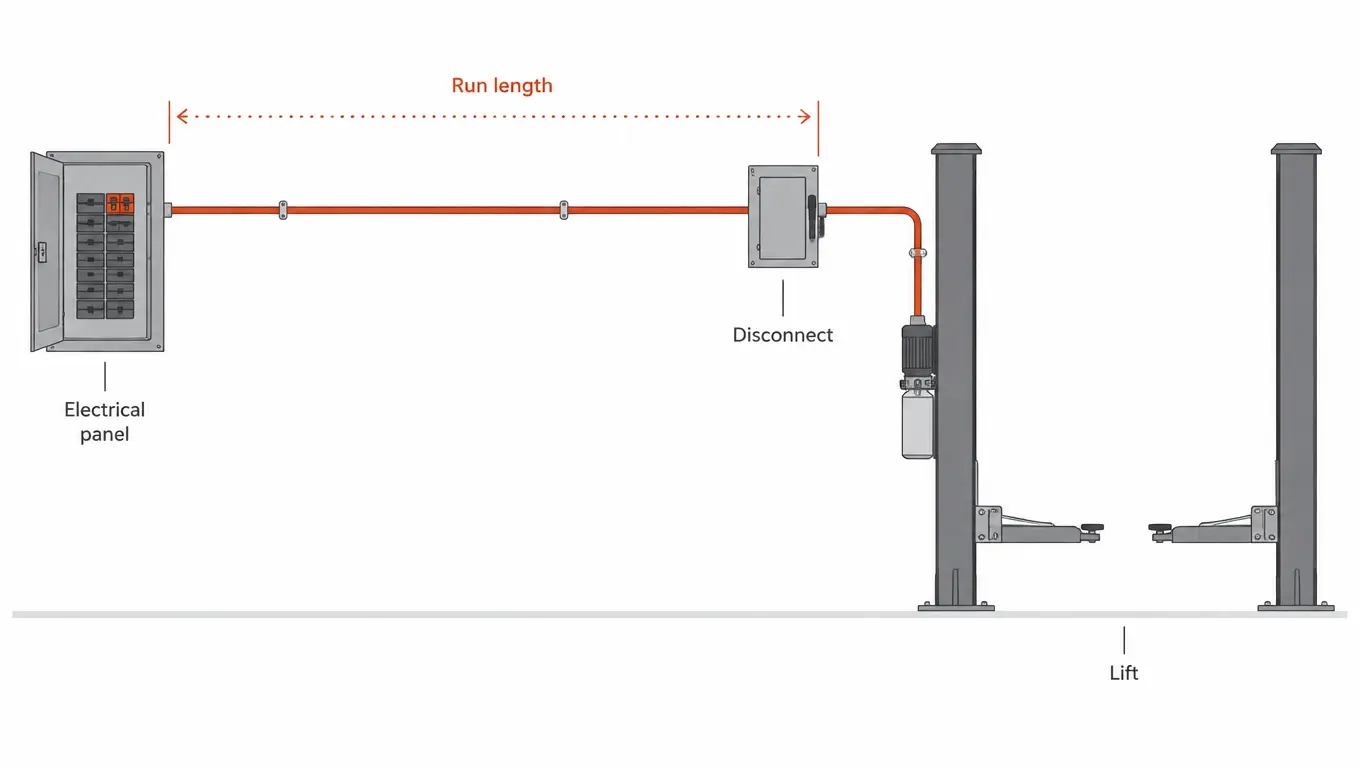
Measure the route the wire will take, not the straight-line distance. Walls, ceilings and doorways add length. Longer runs can push the wire up a size, and that is where quotes climb.
Point
Decide where the power unit sits. That's the primary column, and on most lifts you can choose which side. Mark the disconnect location next to it. Settle this at the layout stage covered in our 2-post lift installation guide, before the anchors go in. Once the columns are anchored, the power-unit side is fixed.
How many amps does a car lift use?
A 3 HP, 240 V 2-post lift draws about 12 to 13 A while lifting and almost nothing at rest. At startup the draw spikes for a fraction of a second.
That startup spike, called inrush current, can reach several times the running current as the motor spins up against a loaded pump. It is the main reason lift circuits use a breaker that looks oversized.
Voltage changes the picture. Deliver the same power at about half the voltage and the current roughly doubles. That's why 120 V lifts need heavier circuits than you'd expect. Our 120 V 4-post parking lifts are rated at 26 A. That's more than a standard 15 A or 20 A garage outlet can supply.
The 125% rule, in one number
Under NEC 430.6 and 430.22, motor branch-circuit wire is sized from the full-load current in NEC Table 430.248, not the nameplate. For a 3 HP single-phase motor at 230 V that table value is 17 A. Multiply by 125% and the wire must carry at least 21.25 A. A lift labeled 13 A still needs wiring rated above 20 A.
What size breaker does a 2 post lift need?
Most 240 V 2-post lifts with a 3 HP motor are installed on a 30 A two-pole breaker. The size that governs is the one printed in your lift manual.
The NEC treats motor circuits differently from outlets. Under NEC 430.52, the breaker protects against short circuits and ground faults, while the motor's own overload protection handles long, heavy running. That's why the code allows a breaker well above the running current. It's sized to carry the startup surge without nuisance trips, not to match the 13 A draw.
A 20 A breaker is where many DIY plans go wrong. It may hold on a light lift and trip on a heavy truck. It also sits below the 21.25 A the code requires the wire to carry.
A bigger breaker is not a safer breaker
Upsizing the breaker past the manual's figure to stop nuisance trips removes protection. The breaker must match what the wire and the lift allow. If a correctly sized breaker keeps tripping, have an electrician check voltage at the power unit. Low voltage makes the motor draw more current.
What size wire do you need for a 2 post lift?
A 30 A lift circuit is commonly wired with 10 AWG copper, with a ground. Long runs may need a larger size to limit voltage drop.
Wire size depends on the breaker, the conductor material, the insulation temperature rating and the run length. The table below is a planning guide for conversations with your electrician, not a substitute for their calculation.
| Scenario | Typical breaker | Typical copper wire | What to watch |
|---|---|---|---|
| Run under about 50 ft | 30 A two-pole | 10 AWG + ground | Standard case. Confirm the breaker size in the manual and the terminal temperature rating. |
| Run about 50 to 100 ft | 30 A two-pole | 10 AWG or 8 AWG | Voltage drop starts to matter. The electrician may upsize the wire, not the breaker. |
| Run over about 100 ft | Per calculation | 8 AWG or larger | A sub-panel near the bays is often cheaper than a long heavy feeder. |
| Aluminum conductors | Per manual | Larger than copper | Aluminum needs a larger gauge and terminals rated for it. Your electrician decides. |
Voltage drop is easy to miss. A motor that sees 220 V instead of 240 V at the end of a long run pulls more current, runs hotter and lifts more slowly. If you're comparing quotes, a larger wire on a long run is a sign of a careful electrician, not an upsell.
Do you need single-phase or three-phase power for a car lift?
Single-phase 240 V is the standard for 2-post lifts, including every Daytona 2-post model. Three-phase buildings can usually feed a single-phase lift, but the voltage has to suit the motor.
Homes and most small shops have 120/240 V single-phase service. Larger commercial buildings often have three-phase service, commonly 208Y/120 V or 480 V in the US and 600 V in parts of Canada.
| Building service | Where you find it | Feeding a 240 V 1PH lift |
|---|---|---|
| 120/240 V single-phase | Homes, small shops | Direct match. A two-pole breaker gives 240 V. |
| 208Y/120 V three-phase | Strip plazas, mixed-use, many dealerships | Two legs give 208 V single-phase. This works only if the motor is rated for 208 V. Expect slightly slower lifting. |
| 240 V three-phase | Older industrial buildings | Two legs usually give 240 V single-phase. Your electrician confirms the configuration. |
| 480 V or 600 V three-phase | Large commercial, fleet depots | Needs a step-down transformer. Budget for it early. |
Key takeaway on phase
If your building is three-phase, find out the voltage before you order. The combination that surprises people is 208 V, because it sits at the low edge of what a 230 V motor tolerates. Send us the panel label and we'll confirm the fit for your model.
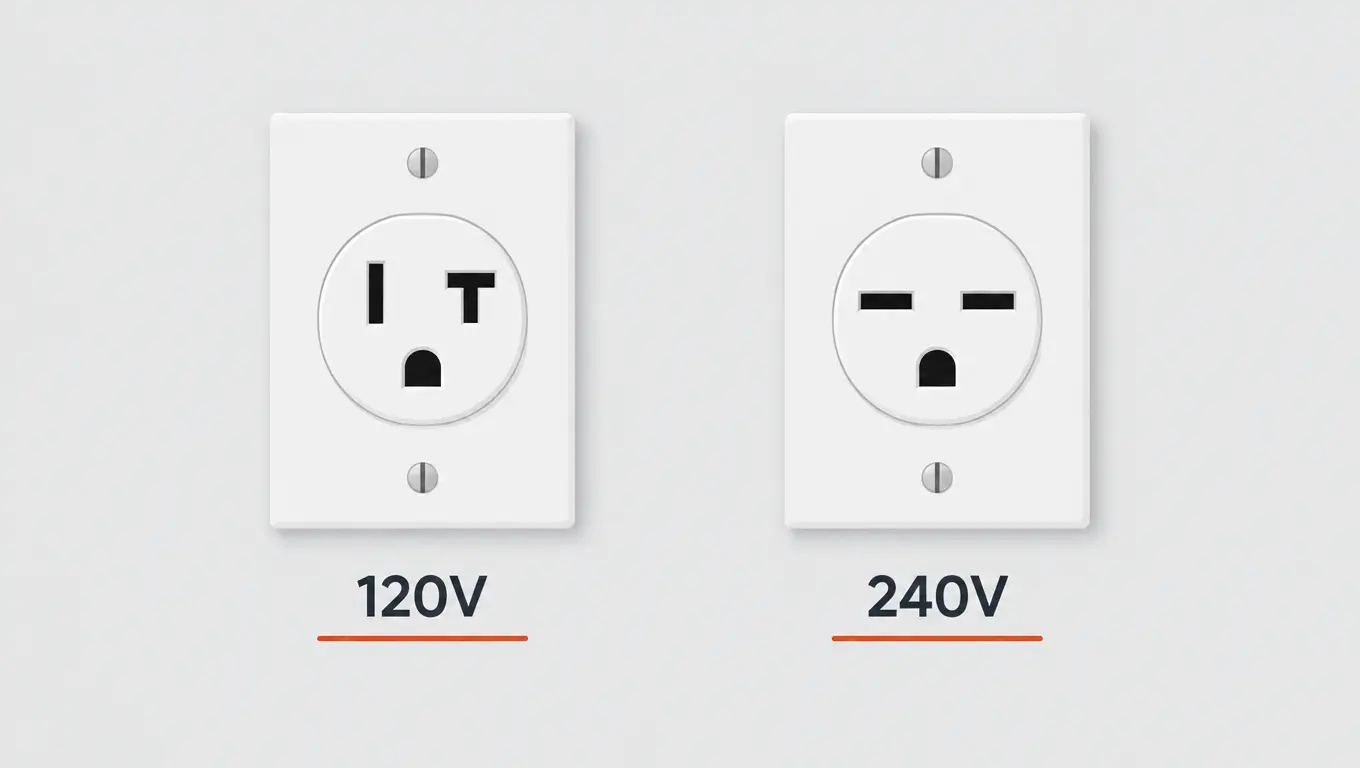
Can a 2 post lift run on 110V?
Most full-rise 2-post lifts cannot. In Daytona's range, only the LTPP6 2-post parking lift is designed for 110 V.
A 3 HP motor on 110 to 120 V would draw about twice the current, needing a circuit most garages don't have. Running a 240 V lift on 110 V isn't an option, and adapter tricks can damage the motor. The 5-2-1 warranty covers power units for 2 years but excludes damage from improper installation.
If you have no 240 V supply and don't want to add one, look at lifts designed for 120 V from the start. Those include the LTPP6, the 120 V LMS6 among our scissor lifts, and our 4-post parking lifts. Check the amp rating of each one against your circuit.
| Factor | 110 to 120 V lift | 240 V lift |
|---|---|---|
| Typical use | Parking, storage, light service | Full-rise service and repair |
| Current for the same power | About double | About half |
| Circuit needed | Often a dedicated 20 A or 30 A 120 V circuit, not a shared outlet | Dedicated two-pole circuit |
| Daytona 2-post options | LTPP6 | BR10-2OH-33, LTPO15, LTPA12, LTPA10, LTPF12, LTPF9 |
Should a car lift be plugged in or hard-wired, and does it need a disconnect?
Either can be acceptable if the manual allows it. Both must give a disconnect within sight of the power unit that can be locked off for service.
NEC 430.102 requires a disconnecting means for a motor and its controller, generally within sight of them. For a lift, that means a technician at the power unit can see and control the shutoff. A plug and receptacle can serve as the disconnect in some cases. A wall-mounted, lockable disconnect switch beside the primary column is the clearer answer, and the one inspectors rarely question.
Plug-in (for example a NEMA 6-30 receptacle)
This is simple to disconnect and makes it easy to move the lift later. The catch in homes is GFCI. The 2020 and 2023 NEC editions require GFCI protection on 240 V garage receptacles in dwellings. Motor inrush can trip some GFCI breakers, so ask your electrician about it.
Hard-wired through a disconnect
This is common in commercial bays. It avoids plug wear and the receptacle-GFCI question, and gives a lockout point for maintenance. Lockout before power-unit work is part of the routine in our 2-post lift maintenance checklist.
Pro tip: mount the disconnect where the operator stands
Put the disconnect on the wall behind the power-unit column at shoulder height, not behind a toolbox or around a corner. An operator who can reach the shutoff in two steps is part of using a car lift safely.
Not sure your panel can take a lift? Send us a photo of your panel and the model you're considering, and we'll tell you what the power unit needs before your electrician visits.
Ask a Lift SpecialistHow much does it cost to wire a car lift?
Industry reporting puts a new dedicated 240 V circuit near the panel at roughly $300 to $900. Long runs, sub-panels and service upgrades cost more.
Cost guides such as Angi put a basic 240 V outlet at about $175 to $300 when the panel is close and has space. Lift circuits usually cost more because they are dedicated, heavier-gauge and often need a disconnect. The table covers the electrical work only. For the full install budget, see our car lift installation cost guide and the wider car lift cost breakdown.
| Scenario | Representative range | What drives it |
|---|---|---|
| New circuit, panel near the bay | $300 to $900 | Breaker, 10 AWG wire, disconnect or receptacle, short run, permit |
| Long run across the building | $700 to $1,500 | Wire length, possible upsizing for voltage drop, conduit and finishing |
| Sub-panel in the shop | $500 to $2,000+ | Feeder size, panel, breakers, and whether other bay circuits are added at the same time |
| Service upgrade | $1,500+ | Utility coordination, new main panel, meter work. Highly site-specific. |
If a service upgrade is on the table, plan the whole shop at once. Adding a lift, a compressor and a tire changer circuit in one visit costs less than three separate visits. Some buyers bundle the lift into third-party automotive lift financing.
What should you give your electrician for an accurate quote?
Give your electrician six things: the data plate or manual, the column location, a panel photo, the run distance, the connection method and who pulls the permit.
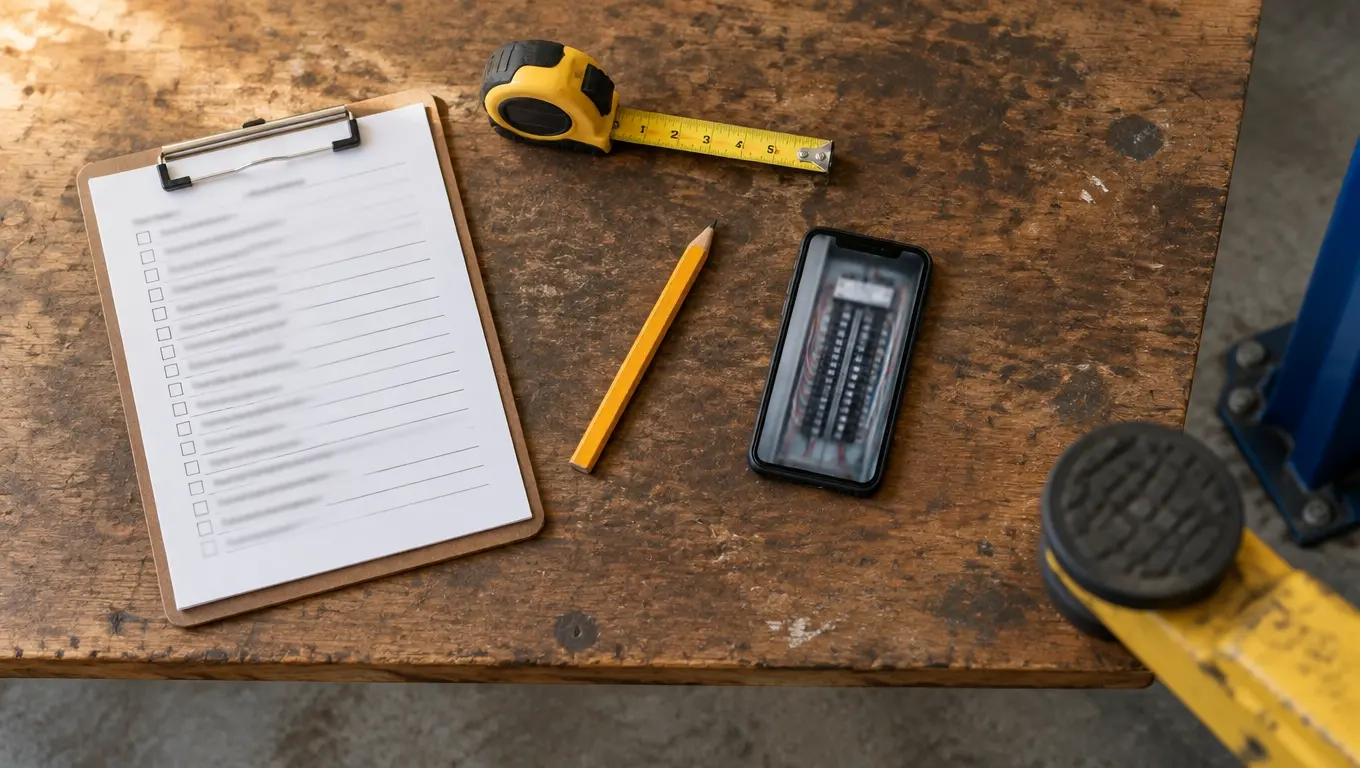
- Data plate photo or manual page. Voltage, phase, horsepower, amps and the manufacturer's breaker size.
- Column location. A floor sketch showing the power-unit side and the bay layout.
- Panel photo. Door open, labels readable, main breaker rating visible.
- Run distance and route. Measured along walls and ceilings, with obstacles noted.
- Connection method. Plug-in or hard-wired, and where the disconnect goes.
- Permit and inspection. Who files, and when the inspection is booked relative to the lift install.
Schedule the electrical rough-in before the lift is delivered. Settle the slab at the same stage. Our guide on how thick concrete needs to be for a 2-post lift covers that side. The full sequence is in how to install an automotive lift.
How is wiring a car lift different in Canada?
In Canada the Canadian Electrical Code (CSA C22.1), with provincial amendments, governs lift circuits. Motor circuits fall under Section 28, and a permit and inspection are generally required.
The CEC's motor rules follow the same logic as the NEC: size the conductors above the motor's full-load current, protect the circuit against short circuits, and provide a disconnect for the motor. Figures and wording differ, so Canadian installs should be quoted by a locally licensed electrical contractor. In Ontario, the Electrical Safety Authority (ESA) sets the rules on what homeowners may do and when a notification is needed.
Electrical inspectors in Canada also check that connected equipment carries an accepted certification or approval mark. Before booking the inspection, contact Daytona customer care for the documentation for your model. Also ask your inspector what they will need to see. Requirements vary by province and by the Authority Having Jurisdiction.
Jurisdiction check
Code adoption differs across US states, municipalities and Canadian provinces. The editions and sections cited here are for orientation only. Your local Authority Having Jurisdiction has the final word.
Get the power right before the lift arrives
- 240 V 2-post range. BR10-2OH-33 (ALI Certified), LTPO15, LTPA12, LTPA10, LTPF12 and LTPF9, all 3 HP single-phase, plus the 110 V LTPP6.
- 5-2-1 warranty. 5 years structural, 2 on power units, 1 on parts. Indoor use only.
- Since 1999. Canadian owned, serving the US and Canada. Find a distributor near you, or ask about our distributor program.
About the author

The Daytona Team
Written by the team at Daytona Automotive Equipment, a Canadian-owned manufacturer of automotive lifts, tire changers and wheel service equipment since 1999.
- Specializations. 2-post, 4-post, scissor and parking lift specification, shop layout and installation planning for US and Canadian service bays.
- Standards. Guidance aligned to ANSI/ALI ALIS installation practice and ANSI/ALI ALOIM operation, inspection and maintenance practice.
- Reviewed by. Daytona product and technical support staff, September 2026.
Daytona Automotive Equipment Inc. · Brighton, ON, Canada · Automotive lifts, tire changers and wheel service equipment since 1999.
References and sources
- National Fire Protection Association. Understanding NFPA 70, National Electrical Code. Articles 210.8, 430.6, 430.22, 430.52, 430.102 and Table 430.248 cited for orientation.
- IAEI Magazine. Automotive Lift Inspections. Electrical inspection considerations for lifts.
- Automotive Lift Institute. Automotive Lift Safety Testing. Electrical safety standards referenced in lift certification.
- Electrical Safety Authority (Ontario). DIY Electrical Work. Homeowner rules and notification requirements in Ontario.
- Angi. How Much Does It Cost to Install a 240V Outlet? Industry cost reporting used for planning ranges.
All cost figures are representative planning ranges from industry reporting, not Daytona quotes. Code references are for orientation only. Your lift manual, a licensed electrician and your local Authority Having Jurisdiction govern every installation. Daytona Automotive Equipment is not affiliated with Harbor Freight.