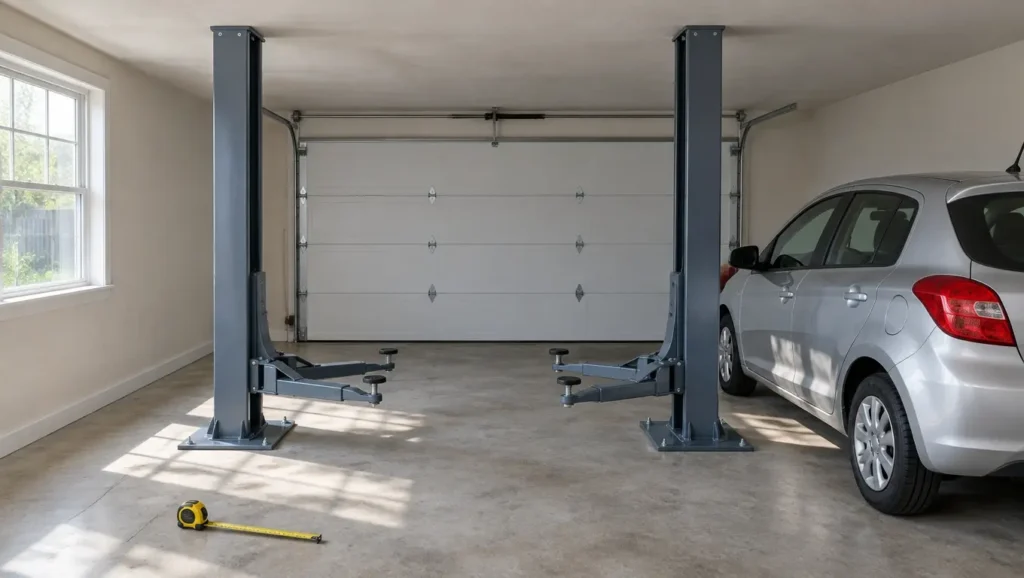
Most homeowners spend between $3,000 and $7,500 total to add a car lift to a home garage, including the lift itself, delivery, a new 240V circuit if needed, minor concrete work, and professional installation.
A basic scissor lift on an existing slab can land near $2,500. A full two-post lift with new electrical and a concrete pour can reach $8,000 or more. The lift on the ad is rarely the number on your credit card statement, and this guide breaks down exactly why.
Every home garage car lift ad shows a price tag on the lift itself. What it does not show is the circuit, the concrete, the freight bill, and the two hours you might spend on the phone with your city about a permit. Once all of that lands, the number on the ad and the number on your credit card statement rarely match.
This guide breaks down every real cost tied to putting a car lift in a home garage, not just the equipment price. We will walk through the lift itself, the electrical work, the floor, the labor, the paperwork nobody warns you about, and how the math changes if you are shopping from Canada instead of the United States.
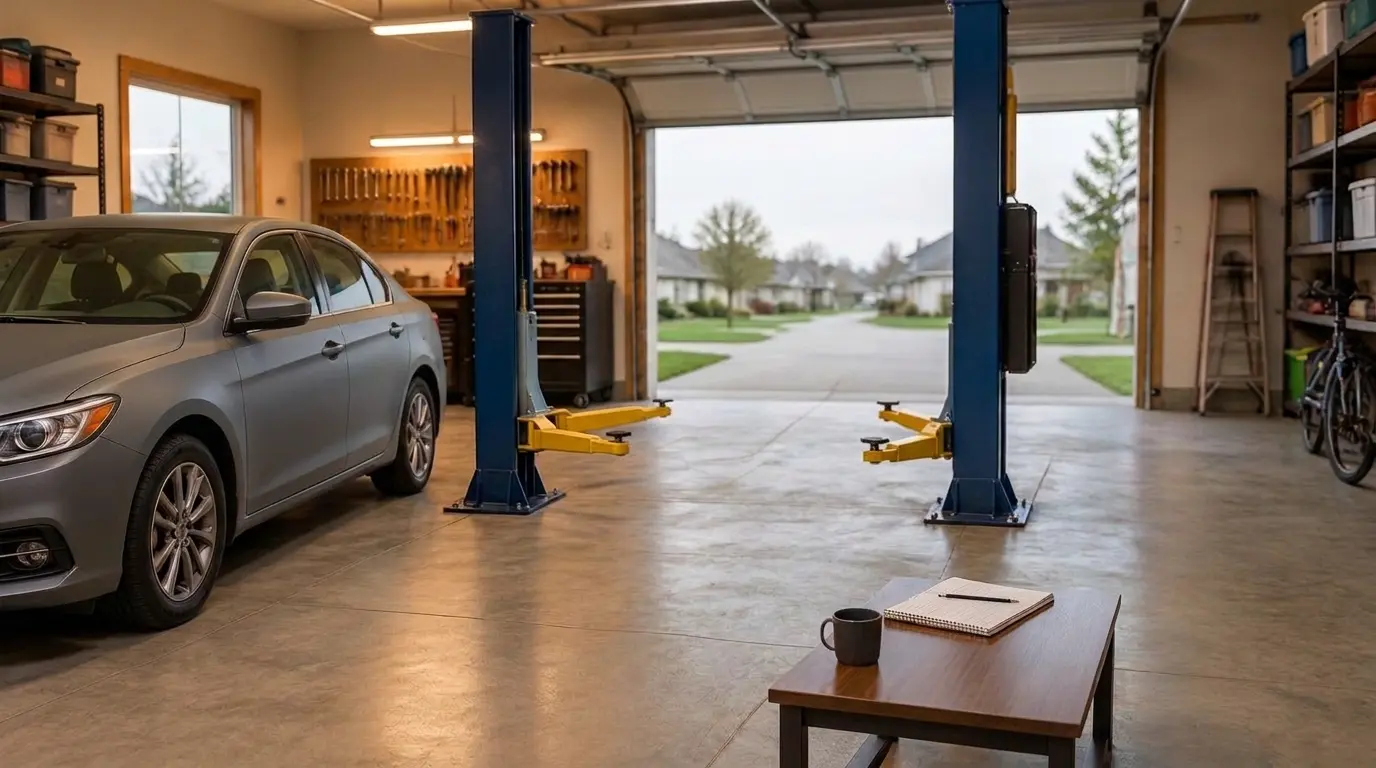
Key takeaways
- Budget $3,000 to $5,000 for a typical home garage lift project with no major surprises.
- The lift is usually 55 to 70 percent of the total bill, not the whole bill.
- Electrical and concrete work are the two line items buyers most often forget to price out before ordering.
- Ceiling height decides your lift type before your budget ever does.
- A permit call to your local building department costs nothing and can save you a failed inspection later.
What actually makes up the total cost
How much does a home garage car lift cost? Most homeowners spend between $3,000 and $7,500 total to add a car lift to a home garage, including the lift itself, delivery, a new 240V circuit if needed, minor concrete work, and professional installation. A basic scissor lift on an existing slab can land near $2,500, while a full two-post lift with new electrical and a concrete pour can reach $8,000 or more.
A home garage car lift cost breaks into five parts, and most buyers only budget for the first one. We call this the Five F's when we walk a customer through a quote: Fixture, Freight, Floor, Feed, and Fitting. Here is what each one runs for a typical home garage project in 2026.
| Cost item | Typical range | Notes |
|---|---|---|
| Fixture (the lift) | $1,800 to $6,000 | Scissor and stackable parking lifts sit at the low end, floorplate two-post lifts at the high end. |
| Freight (delivery) | $150 to $450 | Lifts ship on a pallet by truck freight, not by courier. |
| Floor (concrete work) | $0 to $1,500 | Zero if your existing slab already meets the manufacturer's minimum. |
| Feed (electrical circuit) | $300 to $900 | A new 240V single phase circuit is the most common extra cost on this list. |
| Fitting (installation labor) | $700 to $1,800 | Two-post lifts almost always cost more to install than scissor or stackable models. |
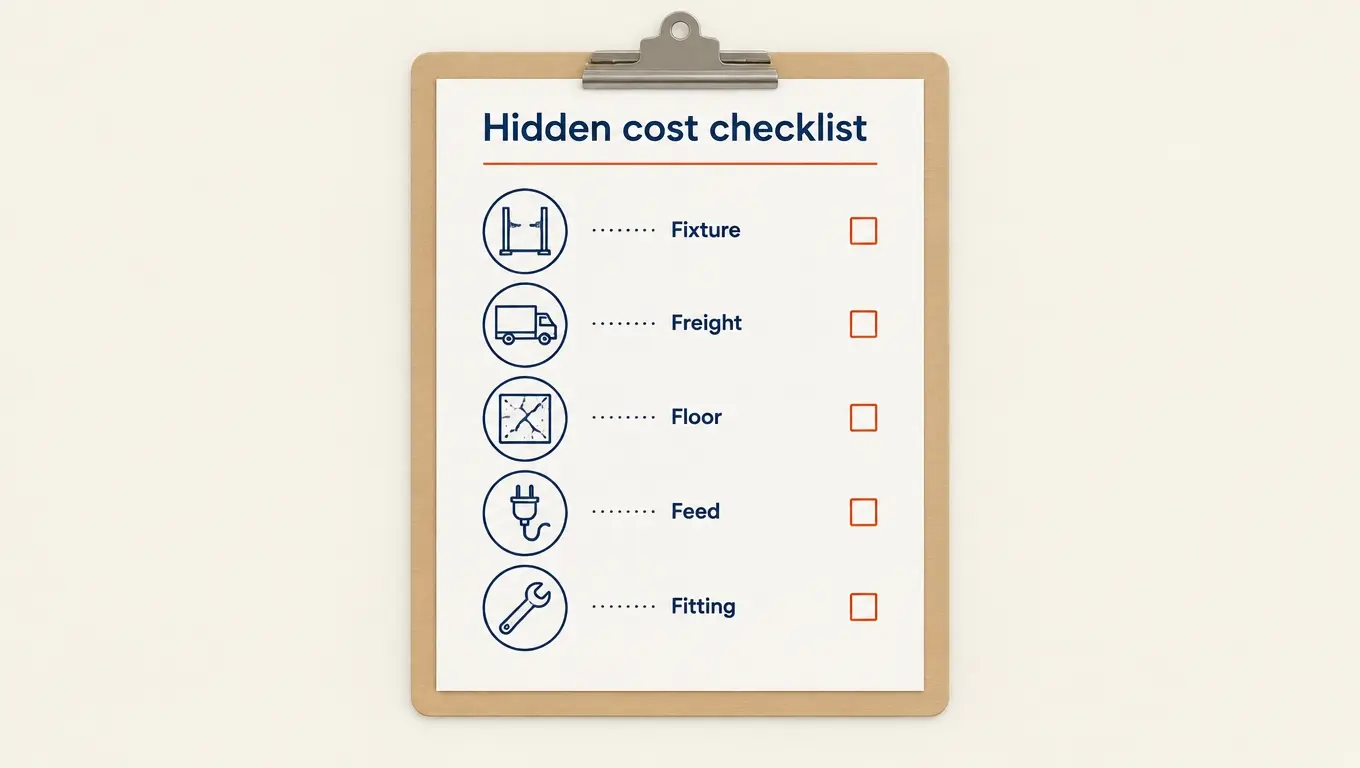
Add those together and a straightforward project lands around $3,000 to $5,000 total. A project that needs a new circuit, a thin slab poured over, and a full two-post installation can climb toward $8,000. We cover the full commercial and residential version of this math in our complete car lift cost guide, but the numbers above are scoped specifically to what a home garage actually needs, not a working bay in a shop.
Common mistake: pricing the lift and stopping there
Buyers price the lift, add a rough installation guess, and stop there. Then the electrician quotes $600 for a new 240V run because the garage panel is on the far wall, and the concrete turns out to be 3 inches thick instead of the 4 inches the manual calls for. Price all five cost items before you place an order, not after the lift is already on your driveway.
Which lift fits a home garage, and what changes the price
Home garages are not shop bays. Ceilings run 8 to 10 feet instead of 12 to 14, power panels are often 100 or 150 amp instead of a shop's 200 amp service, and floors are usually a standard 4-inch residential slab rather than a reinforced 6-inch commercial pour. Those three differences change which lift makes sense and what it costs to install.
| Lift type | Ceiling needed | Power | Typical price |
|---|---|---|---|
| Mid-rise scissor lift | 8 feet or more | 120V | $1,800 to $3,200 |
| Stackable 2-post parking lift | 9 feet or more | 110V to 120V | $2,500 to $4,000 |
| Floorplate 2-post lift | 9.5 to 10 feet | 240V single phase | $3,200 to $6,000 |
| Overhead 2-post lift | 12 feet or more | 240V single phase | $2,000 to $7,000 |
If your garage has an 8-foot ceiling, most of that table is off the menu before price even matters, because a standard overhead two-post lift will not physically fit. We wrote a full walkthrough of the clearance math and low-ceiling options in our guide to 2-post car lifts for an 8-foot ceiling, and it is worth reading before you shop, because the ceiling decides your lift type long before the budget does.
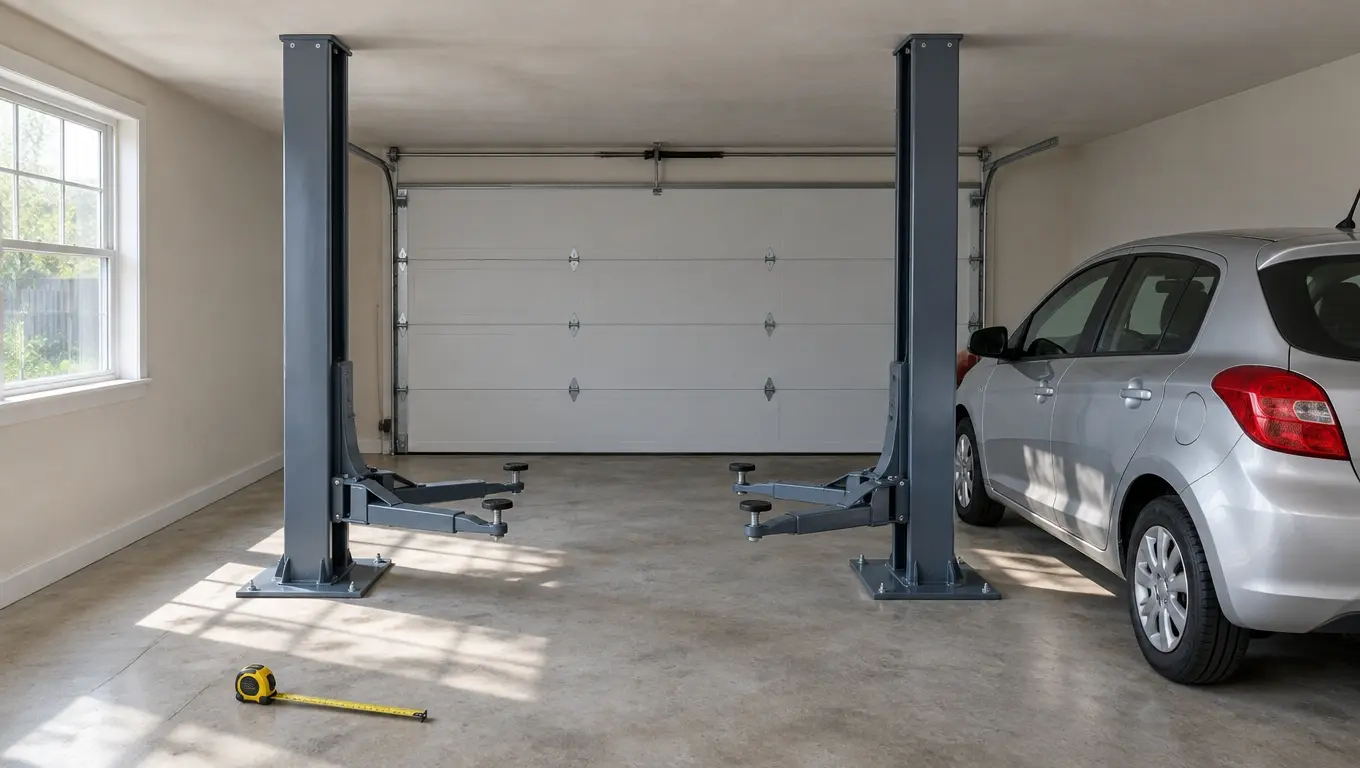
For most home garages with 9.5 feet of clearance or more, a floorplate two-post lift like Daytona's LTPF9 gives full wheels-free access without needing the overhead crossbar a taller shop lift requires. It runs on a 240V single phase circuit and fits a standard residential slab once that slab meets the manufacturer's thickness minimum. If your garage tops out closer to 8 feet, a mid-rise scissor lift on 120V power is the more realistic fit, even though it will not give you the same full-height access.
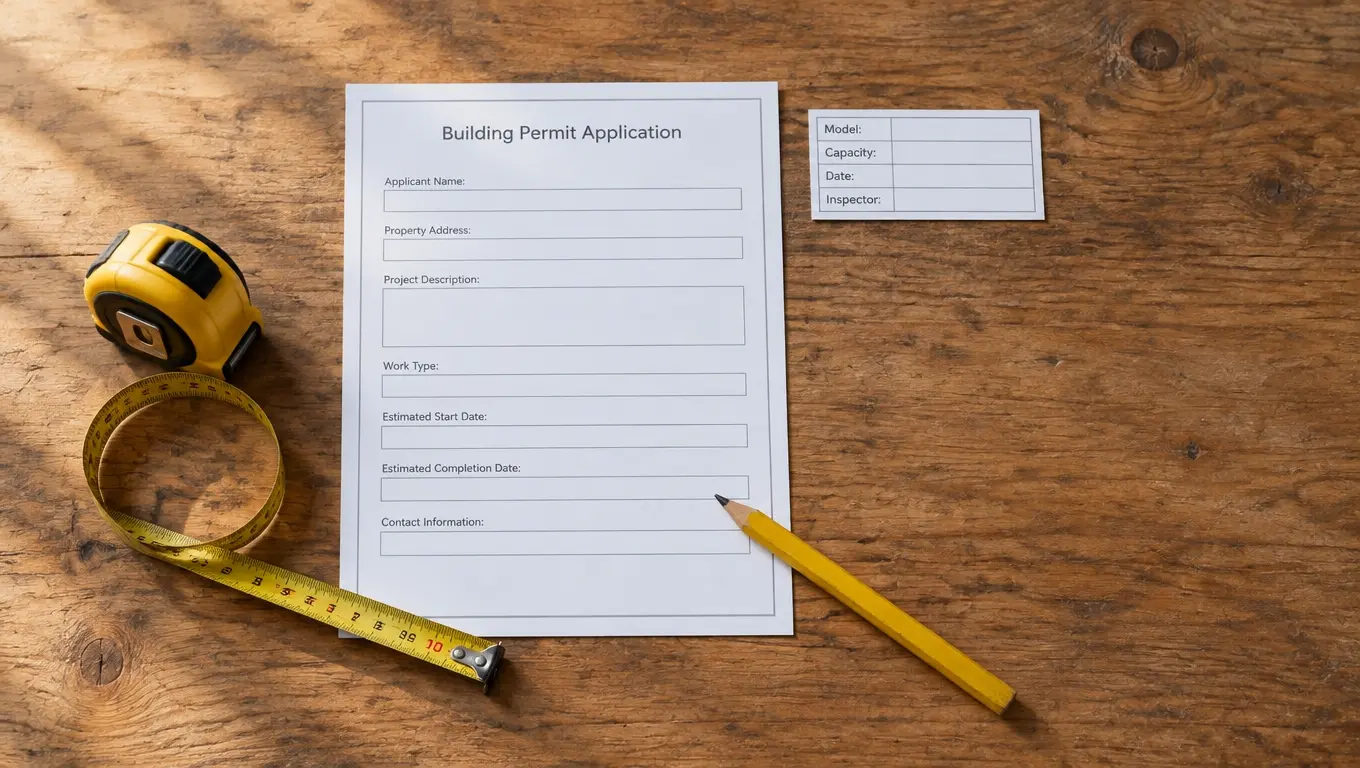
Does a home garage car lift need a permit?
This is the question most buyers do not ask until the lift is already ordered, and the honest answer is that it depends on your city. Many building departments treat a bolt-down or freestanding lift as movable equipment, similar to a large table saw, which means the lift itself does not trigger a building permit. What almost always does trigger a permit is the electrical work, because running a new 240V circuit into a garage panel is inspected work in nearly every jurisdiction.
There is also a code layer that is easy to miss. Where a jurisdiction has adopted the 2024 International Residential Code, Section R317.7 requires an automotive lift installed in a home to be listed and labeled to the ANSI/ALI ALCTV standard and installed per the manufacturer's instructions, and it cannot be placed in habitable space. In practice, this means the lift needs to be a certified model, not just any lift you found online, once your area has adopted that code cycle.
Stat callout: the code section behind this rule
2024 IRC Section R317.7 is the code provision that governs home automotive lift installation and certification where adopted, according to the Automotive Lift Institute's summary of 2024 IRC Chapter 3.
There is no national rule that applies everywhere, and adoption of the 2024 IRC varies by state and even by county. The one step every credible source agrees on is a phone call to your local building department before you buy, not after. Ask three things: does the lift itself need a permit, does the new circuit need one, and has your area adopted the 2024 IRC lift requirement. That single call settles more than an hour of forum reading ever will.
Does homeowners insurance cover a car lift?
Most standard homeowners policies are named-peril policies, meaning they only pay out for the specific causes of loss listed in the contract, such as fire, theft, or wind. A car lift is personal property in the eyes of most insurers, so it is generally covered against those named perils the same way a table saw or a snowblower would be. What it usually will not cover is damage the lift causes to a vehicle, since auto damage is the job of your car insurance, not your home policy.
Pro tip: call your insurer before your installer
Ask two things: does adding a car lift change your liability coverage, and does the lift itself need to be scheduled as a separate item to be fully covered if it is damaged or stolen. A five-minute call avoids a bad surprise if something ever goes wrong.
What the electrical circuit actually adds to the bill
Two-post lifts, whether overhead or floorplate, typically run on a 240V single phase circuit, while scissor lifts and some stackable parking lifts run on standard 120V household power. If your garage panel already has an open 240V circuit nearby, you might only pay for a new outlet and a short run of wire. If it does not, a licensed electrician pulling a new dedicated 240V circuit into a garage typically charges between $300 and $900 depending on panel distance and local labor rates. We go deeper into amperage, breaker sizing, and 120V versus 240V decisions in our two-post lift power requirements guide, which is worth checking before you call an electrician so you know exactly what to ask for.
What the concrete work actually adds to the bill
Most home garage slabs are poured at a standard 4 inches, which is right at the minimum many lift manufacturers require for their lighter capacity models. Heavier capacity two-post lifts often call for closer to 6 inches of cured, 3,000 PSI concrete. If your slab already meets the spec for the lift you want, this cost item is zero. If it does not, thickening a section of slab or pouring a small reinforced pad typically runs between $600 and $1,500 depending on the area involved. Our concrete thickness guide for 2-post lifts walks through exactly how to check your slab and what the manufacturer's manual is looking for before you order any concrete work.
Should you install it yourself or hire a pro?
Stackable parking lifts and some scissor lifts are within reach for a handy homeowner with a helper, because they often bolt to the floor with less precision required than a full overhead system. Two-post lifts are a different story. Anchoring has to be exact, the electrical tie-in should go to a licensed electrician, and most manufacturer warranties do not cover damage caused by improper installation. For a full breakdown of DIY versus professional installation costs by lift type, see our car lift installation cost guide, which covers the labor math in more depth than we can here.
What it costs in Canada versus the United States
Daytona is a Canadian manufacturer based in Brighton, Ontario, and we get this question often enough that it deserves its own section. The lift, freight, and labor math work out similarly on both sides of the border once you convert currency, but two things genuinely differ.
| Factor | United States | Canada |
|---|---|---|
| Permit trigger for the lift itself | Usually exempt, treated as movable equipment | Usually exempt, but check with your municipality directly |
| Electrical permit | Almost always required for a new 240V circuit | Almost always required, and often needs an ESA inspection in Ontario specifically |
| Certification standard referenced | 2024 IRC, Section R317.7, ANSI/ALI ALCTV | No identical national code clause, but many provincial electrical codes still require inspection of the circuit itself |
The safest approach on either side of the border is the same one: confirm with your local authority before the lift ships, not after it lands on your driveway.
Is it worth it if you only use the garage occasionally?
If you change your own oil, rotate your own tires, or work on a project car a few weekends a year, a lift usually pays for itself faster than people expect, mostly by replacing shop labor bills you would otherwise pay every time. If you only need it for the rare project, the math still works, it just takes longer to break even. We built out the full payback calculation, including how many DIY jobs it takes to cover the cost of a typical home garage lift, in our car lift ROI guide, which is the better read if payback time is your main question rather than upfront cost.
Not sure which lift fits your garage and your budget? Send us your ceiling height, floor thickness, and available power, and we will match you with a lift that actually fits before you spend a dollar.
Get a Free QuoteGet a lift matched to your garage
Send us your garage dimensions, ceiling height, and location, and we will match you with a lift that actually fits before you spend a dollar.
- Home-garage models. Floorplate two-post, stackable parking, and mid-rise scissor lifts built for lower ceilings and lighter power service.
- 5-2-1 warranty. 5 years structural, 2 on power units, 1 on parts.
- Financing available. Third-party financing through NewLane Finance in the US and Active Growth Financial in Canada.
- Since 1999. Canadian owned and operated, serving the US and Canada.
About the author

The Daytona Team
Written by the team at Daytona Automotive Equipment, a Canadian-owned manufacturer of automotive lifts, tire changers and wheel service equipment since 1999.
- Specializations. Two-post, four-post, alignment, parking and scissor lifts from 2,200 lb to 35,000 lb, plus wheel service equipment and lift accessories.
- Standards. Guidance aligned to ANSI/ALI ALCTV and ALOIM industry standards.
- Reviewed by. Daytona product and customer care staff, September 2026.
Daytona Automotive Equipment Inc. · Brighton, ON, Canada · Automotive lifts, tire changers and wheel service equipment since 1999.
References and sources
- Automotive Lift Institute. 2024 IRC Chapter 3: Automotive Lift Requirements. ALI, accessed September 2026.
- IAEI Magazine. Automotive Lift Inspections. International Association of Electrical Inspectors, accessed September 2026.
- Policygenius. Does Homeowners Insurance Cover Garages? Policygenius, accessed September 2026.
- Concrete Block Calculator. Cost of a Concrete Slab. Accessed September 2026.
Cost figures in this article reflect representative 2026 pricing gathered from manufacturer, retailer, and industry sources current as of publication, and are provided for planning purposes only, not as quotations. Permit, code, and insurance requirements vary by local jurisdiction and change over time. Confirm current requirements with your local building department, your insurance agent, and a licensed electrician before purchasing or installing any lift.