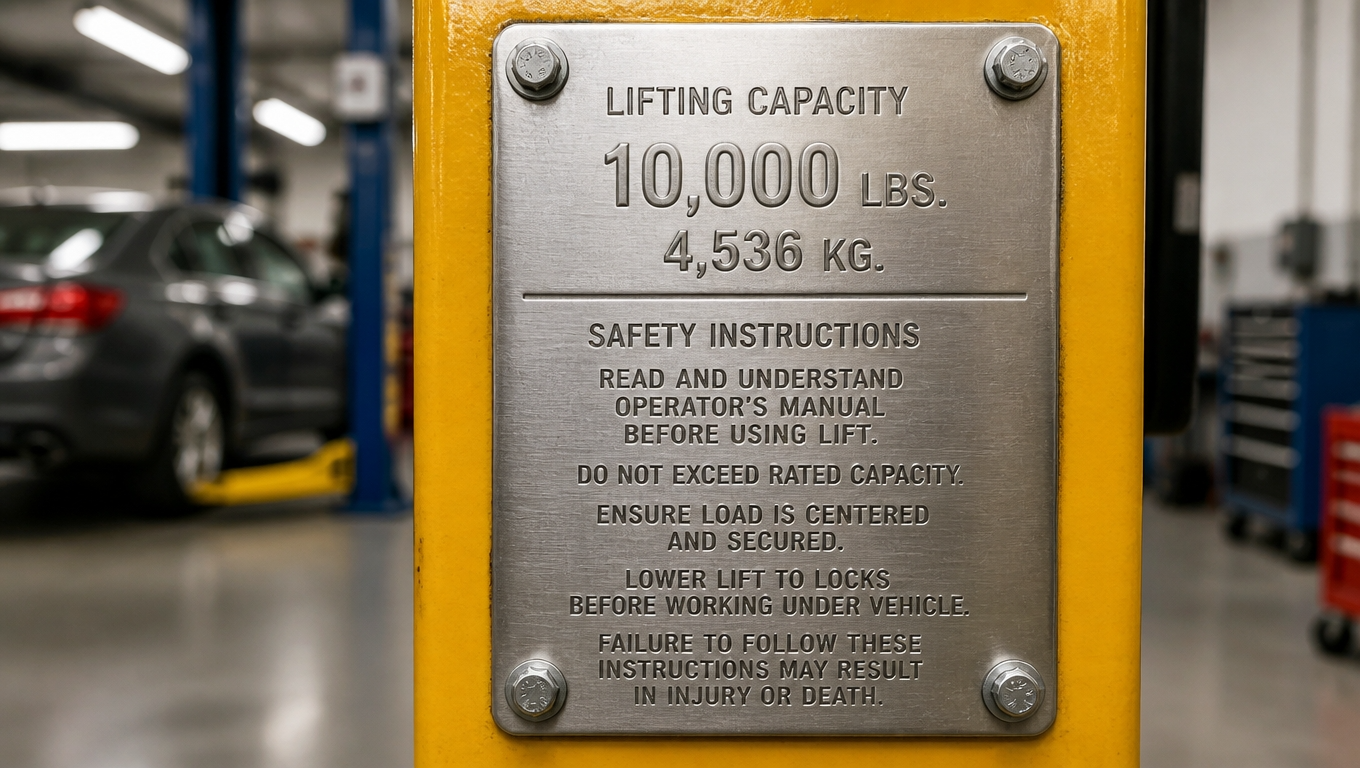
Picking the right 2 post lift capacity is the one decision you cannot walk back after the lift is bolted to your floor. Buy too small and you'll spend every day working nervously at the edge of the rating, which is neither safe nor comfortable. Buy way too big and you've spent money on steel you'll never use.
Here's the good news: sizing a lift is simpler than most buyers think, once you know two things. First, what your heaviest vehicle actually weighs when it's loaded. Second, how a lift's rated number really works. Get those two right and the choice almost makes itself.
The Short Answer
Most home garages and light shops are well served by a 10,000 lb 2 post lift, which covers passenger cars, crossovers, and half-ton trucks. Step up to a 12,000 lb lift for full-size and three-quarter-ton trucks, and to a 15,000 lb lift for one-ton trucks, duallies, and heavier commercial vehicles. A simple rule: take the loaded weight of your heaviest vehicle and add about 25 percent of headroom, then pick the lift that comfortably clears that number.
What Does 2 Post Lift Capacity Actually Mean?
A 2 post lift's capacity is the maximum total weight it is rated to raise and hold safely, spread correctly across all four arms. It is not a promise that the lift can pick up any vehicle that weighs that exact number. Rated capacity and safe usable capacity are two different things.
Think of it like the weight limit on a shelf. The number on the box assumes the load sits evenly and squarely. Push the load to one edge and the safe limit drops fast. A lift works the same way. The rated number assumes proper positioning and even weight, which real vehicles rarely have.
Rated Capacity vs Usable Capacity
Most 2 post lift weight capacity ratings assume the vehicle is centered and balanced. Because engines sit up front, most vehicles carry roughly 60 percent of their weight over the front axle. That imbalance eats into your safe margin. It's why we tell buyers to treat the rating as a ceiling, not a target.
How Much Weight Can Each Lift Arm Hold?
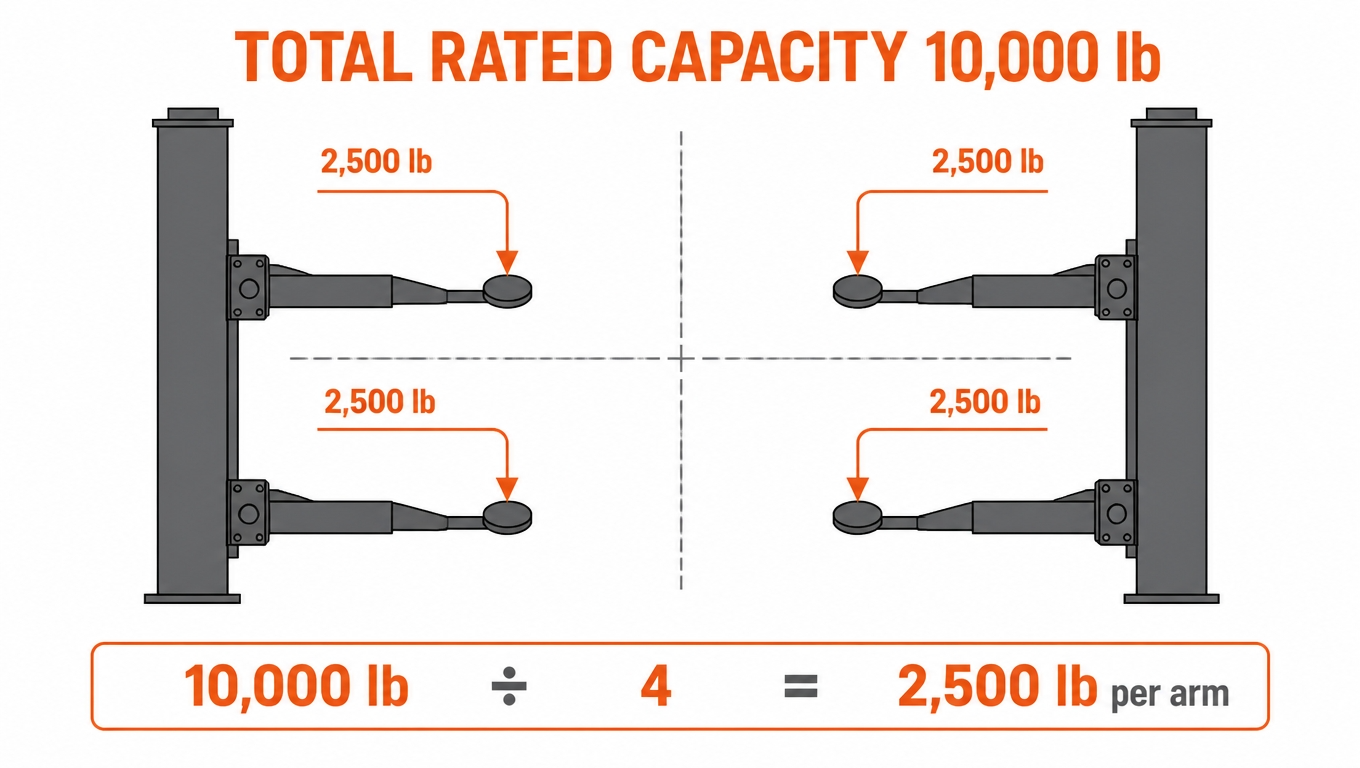
A 2 post lift carries the vehicle on four arms, so the simplest way to understand car lift capacity per arm is to divide the total rating by four. On a 10,000 lb lift, each arm is rated for about 2,500 lb. That per-arm figure matters more than the headline number, because a front-heavy truck can load the two front arms well past their fair share.
| Lift Rating | Weight Per Arm (÷ 4) | What That Means In Practice |
|---|---|---|
| 9,000 lb | 2,250 lb per arm | Fine for most cars and light half-ton trucks with even loading |
| 10,000 lb | 2,500 lb per arm | Comfortable for cars, crossovers, and half-ton pickups |
| 12,000 lb | 3,000 lb per arm | Handles full-size and three-quarter-ton trucks with margin |
| 15,000 lb | 3,750 lb per arm | Built for one-ton trucks, duallies, and heavy loads |
The Insight Most Buyers Miss
In our experience helping shops and home garages through our distributor network, the single most common sizing mistake is using a vehicle's empty curb weight from a spec sheet. Real vehicles carry fuel, tools, aftermarket bumpers, winches, racks, and cargo. We've seen a "6,000 lb" truck tip the scale closer to 7,000 lb once it's loaded for work. Always size for how the vehicle actually sits in your bay, not the brochure number.
What Size 2 Post Lift Do You Need for Your Vehicle?
If you're asking what capacity car lift do I need, start with your heaviest vehicle and match it to the table below. This is the fastest way to answer what size lift do I need for my truck without second-guessing every spec sheet.
| Vehicle Type | Typical Loaded Weight | Recommended Lift Capacity |
|---|---|---|
| Sedans, coupes, small crossovers | 3,200 to 4,500 lb | 9,000 to 10,000 lb |
| Full-size SUVs, half-ton trucks (F-150, Silverado 1500) | 4,800 to 6,200 lb | 10,000 lb |
| Three-quarter-ton and full-size work trucks | 6,500 to 8,000 lb | 12,000 lb |
| One-ton trucks, duallies, cargo vans | 8,000 to 11,000 lb | 15,000 lb |
Those loaded-weight ranges line up with published manufacturer curb weights. For reference, the NHTSA defines a vehicle's gross vehicle weight rating (GVWR) as the maximum loaded weight the manufacturer sets for a single vehicle, including fuel, passengers, and cargo, so it's a useful upper bound when you're sizing a lift. You can look up any vehicle's GVWR on its door-jamb sticker or in the manufacturer's specs.
Don't Forget Electric Trucks and SUVs
One trend worth planning for in 2026: electric vehicles are noticeably heavier than their gas versions, mostly because of the battery pack. The Ford F-150 Lightning, for example, has a base curb weight north of 6,000 lb, roughly 1,500 to 2,000 lb more than a comparable gas F-150. If EVs are in your future, size up a class so the extra battery weight doesn't quietly eat your safety margin.
The Daytona 25% Headroom Method
Competitor guides love the "add 25 percent" rule, and it's a solid start. We take it one step further so front-heavy loads don't catch you out. Here's the method we walk buyers through:
- Find your real number. Weigh or look up your heaviest vehicle, then add the fuel, tools, and gear it actually carries.
- Add 25 percent headroom. Multiply that loaded weight by 1.25. A 6,000 lb loaded truck becomes 7,500 lb.
- Check the per-arm figure. Confirm the lift's per-arm rating still clears your load once you account for a front-heavy stance. This is the step most shoppers skip.
Worked Example: Sizing a Lift for a Diesel Work Truck
Say your heaviest vehicle is a 2025 Ford F-250 with the 6.7L diesel. Ford's published curb weight for that truck runs roughly 6,500 to 7,000 lb before you add a toolbox, a full fuel tank, and gear.
Start with a realistic loaded number of about 7,200 lb. Add 25 percent headroom: 7,200 times 1.25 is 9,000 lb. That already points you past a 9,000 lb lift. Now check the per-arm math on a front-heavy diesel, where the front axle can carry 60 percent of the weight. A 12,000 lb lift gives 3,000 lb per arm, which clears the load with room to spare, while a 10,000 lb lift would leave you closer to the edge than we'd recommend. The answer here is a 12,000 lb lift.
Find Your Capacity in 10 Seconds
Prefer to skip the math? Enter your heaviest vehicle's loaded weight below and this calculator applies our Headroom Method, then suggests the Daytona capacity class that fits.
2 Post Lift Capacity Calculator
Enter the loaded weight of the heaviest vehicle you plan to lift (curb weight plus fuel, tools, and gear).
This tool gives a general starting point only. Always confirm the exact rating and per-arm limit against your chosen model's spec sheet, and consult a qualified professional before you buy or install.
9,000 vs 10,000 lb: What's the Difference?
The 9000 vs 10000 lb lift question comes up constantly, and the honest answer is that the gap is small but meaningful. A 9,000 lb lift gives you 2,250 lb per arm, which is plenty for cars, crossovers, and lighter half-ton trucks. A 10,000 lb lift gives you 2,500 lb per arm, and that extra margin is exactly what you want when a front-heavy pickup loads the front arms harder than the rear.
So how much can a 9000 lb lift actually hold in the real world? Safely, you want the loaded vehicle and its weight bias to stay comfortably under both the total and the per-arm limits. For most half-ton trucks, that means a 9,000 lb lift is workable but a 10,000 lb lift is the more relaxed choice. Daytona's LTPF9 9,000 lb floorplate lift suits low-ceiling car work, while the LTPA10 10,000 lb adjustable lift is our go-to for a mixed home or light shop bay.
10k vs 12k 2 Post Lift: Which Should You Choose?
If you regularly lift full-size or three-quarter-ton trucks, the 10k vs 12k 2 post lift decision usually lands on the 12k. A 10,000 lb lift handles most half-ton trucks with room to spare, but a loaded three-quarter-ton work truck can push a 10k lift closer to its limit than you'd like. The 12,000 lb class gives you 3,000 lb per arm, which absorbs heavy front ends and cargo without drama.
Our advice: if your heaviest vehicle is a half-ton or lighter, a 10k is the sensible pick. The moment three-quarter-ton or diesel trucks enter the picture, step up to the LTPA12 12,000 lb adjustable lift. The extra capacity costs less than the downtime and risk of running a lift at its ceiling every day.
When Do You Need a 15,000 lb Lift?
A 15000 lb 2 post lift is the right call for one-ton trucks, dually pickups, cargo vans, and shops that service a wide range of heavy vehicles. At 3,750 lb per arm, it carries the biggest light-duty rigs on the road with a comfortable margin, which is exactly what you want when the vehicle mix is unpredictable. Daytona's LTPO15 15,000 lb overhead lift covers this tier and ships with a height extension kit for taller vehicles.
Daytona's Full 2 Post Capacity Chart
Daytona has built 2 post lifts for the US and Canadian markets since 1999, with a lineup that spans 9,000 to 15,000 lb. Here's the full range so you can match a capacity class to a specific model at a glance. Browse the complete 2 post lift category or the wider automotive lifts hub for the full picture.
| Model | Capacity | Type | Best For |
|---|---|---|---|
| LTPF9 | 9,000 lb | Floorplate | Cars and light trucks in low-ceiling garages |
| LTPA10 | 10,000 lb | Adjustable | Mixed home and light shop bays |
| BR10-2OH-33 | 10,000 lb | Overhead (ALI Certified) | Shops that want an ALI Certified lift |
| LTPF12 | 12,000 lb | Floorplate | Trucks in low-ceiling spaces |
| LTPA12 | 12,000 lb | Adjustable | Full-size and three-quarter-ton trucks |
| LTPO15 | 15,000 lb | Overhead | One-ton trucks, duallies, heavy loads |
If certification is on your checklist, the ALI Certified BR10-2OH-33 10,000 lb overhead lift is Daytona's only ALI-certified model. Independent testing under the ANSI/ALI ALCTV standard (Automotive Lifts, Safety Requirements for Construction, Testing and Validation) overloads a lift to 150 percent of its rated capacity to confirm structural strength, which is a genuine advantage worth understanding. You can read more about the standard directly from the Automotive Lift Institute.
What Happens If You Overload a 2 Post Lift?
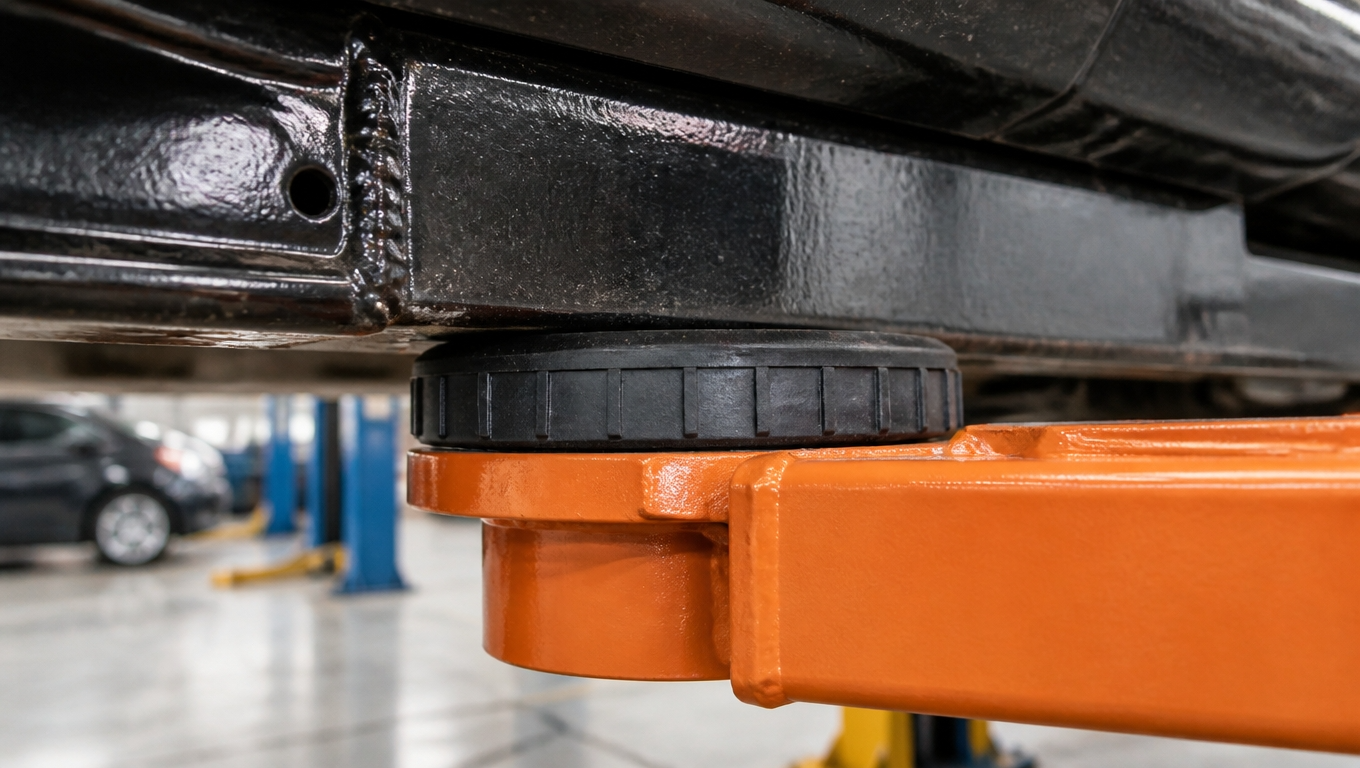
Overloading a 2 post lift is not a small risk. Pushing past the rating strains the cables, hydraulics, and structural steel, and it can lead to slow or uneven lifting, premature wear, or in the worst case a dropped vehicle. This is why sizing with headroom matters so much.
Overloading Voids Your Warranty
Here's a detail buyers often overlook: overloading is one of the conditions that voids Daytona's 5-2-1 warranty (5 years structural, 2 years power units, 1 year parts). Running a lift beyond its rated capacity isn't just unsafe, it can leave you without coverage on an expensive piece of equipment. Sizing up one class is cheap insurance against both problems.
Does Capacity Affect Concrete and Installation?
Yes. Heavier-capacity lifts put more load into the anchor bolts and the slab beneath them, so bigger lifts generally call for thicker, stronger concrete. Always follow your specific model's manual and consult a qualified professional before you install, especially if your slab is thin, aged, or post-tensioned. Our guide on how thick your concrete needs to be for a 2 post lift walks through the numbers, and the best 2 post car lift buyer's guide ties capacity together with the rest of your decision. If you want to see how the full range fits your budget, Daytona also offers third-party equipment financing options. And if you're still weighing a 2 post against other styles, our 2 post lift vs 4 post lift comparison helps.
Frequently Asked Questions
What size 2 post lift do I need?
Start with the loaded weight of your heaviest vehicle and add about 25 percent of headroom. Most cars and half-ton trucks fit a 10,000 lb lift, full-size and three-quarter-ton trucks suit a 12,000 lb lift, and one-ton trucks or duallies call for a 15,000 lb lift. Always confirm the per-arm rating clears a front-heavy load.
How much weight can a 2 post lift hold?
A 2 post lift can hold up to its total rated capacity when the vehicle is centered and evenly balanced across all four arms. Common ratings run from 9,000 lb up to 15,000 lb and beyond. The safe usable figure is lower for front-heavy vehicles, so treat the rating as a ceiling rather than a target.
Can a 9,000 lb lift safely lift a 9,000 lb vehicle?
In practice, no, not comfortably. A 9,000 lb rating assumes perfect balance, but real vehicles carry most of their weight over the front axle, which overloads the front arms. For a 9,000 lb vehicle you would want a lift rated higher, with per-arm capacity that clears the front-heavy load.
Is a 10,000 lb lift enough for a truck?
A 10,000 lb lift is enough for most half-ton trucks like an F-150 or Silverado 1500, with room to spare. For three-quarter-ton, one-ton, or diesel trucks, step up to a 12,000 or 15,000 lb lift. Size for the vehicle's loaded weight, not its empty curb weight.
What is the difference between a 9,000 and 10,000 lb lift?
The main difference is per-arm capacity: a 9,000 lb lift gives about 2,250 lb per arm, while a 10,000 lb lift gives about 2,500 lb per arm. That extra margin helps with front-heavy trucks. For mixed home or light shop use, the 10,000 lb class is the more relaxed choice.
Should I get a 10k or 12k 2 post lift?
Choose a 10k lift if your heaviest vehicle is a half-ton truck or lighter. Choose a 12k lift if you regularly service full-size or three-quarter-ton trucks, since 3,000 lb per arm absorbs heavy front ends without stress. The extra capacity costs less than running a lift at its ceiling every day.
How much weight can each arm of a 2 post lift hold?
Each arm carries roughly one quarter of the total rating. That works out to about 2,250 lb per arm on a 9,000 lb lift, 2,500 lb on a 10,000 lb lift, 3,000 lb on a 12,000 lb lift, and 3,750 lb on a 15,000 lb lift. Front-heavy vehicles load the front arms harder, so the per-arm figure matters as much as the total.
What is the 25 percent rule for lift capacity?
The 25 percent rule means taking the loaded weight of your heaviest vehicle and adding 25 percent of headroom before choosing a lift capacity. A 6,000 lb loaded truck becomes 7,500 lb, pointing you to a lift that comfortably clears that number. It's a simple buffer against uneven loading and heavier-than-expected vehicles.
What size lift do I need for a half-ton truck?
A 10,000 lb 2 post lift is the standard choice for a half-ton truck such as an F-150 or Silverado 1500. It provides 2,500 lb per arm, which comfortably handles the loaded weight and front-heavy stance of most half-ton pickups. If your truck is heavily loaded for work, consider stepping up to 12,000 lb.
Do electric trucks need a bigger lift?
Often yes. Electric trucks and SUVs carry heavy battery packs, which can add 1,500 to 2,000 lb over a comparable gas model. A Ford F-150 Lightning, for example, has a curb weight above 6,000 lb. If you plan to service EVs, size up one capacity class to keep a comfortable safety margin.
Does going over capacity void the warranty?
Yes. Overloading a lift beyond its rated capacity is one of the conditions that voids Daytona's 5-2-1 warranty. Beyond the coverage issue, overloading is a serious safety risk that strains cables, hydraulics, and structural steel. Sizing up one capacity class is an easy way to protect both your safety and your warranty.
What does ALI certification test for capacity?
Under the ANSI/ALI ALCTV standard, an independent lab overloads a lift to 150 percent of its rated capacity to confirm its structural strength, then cycles it under load to validate durability. Daytona's BR10-2OH-33 is its only ALI-certified model. This independent testing is a genuine advantage when certification is on your checklist.
How heavy is too heavy for a 2 post lift?
A vehicle is too heavy when its loaded weight, or its weight on any single arm, approaches or exceeds the lift's rated limits. Because most vehicles are front-heavy, you should keep a comfortable margin below the total rating rather than lifting right at it. When in doubt, size up to the next capacity class.

Not Sure Which Capacity You Need?
Send us the heaviest vehicle you plan to lift and how it's loaded, and we'll match the right Daytona 2 post lift and connect you with a distributor or installer in your area.
- Capacity range from 9,000 lb to 15,000 lb across the 2 post lineup
- 5-2-1 Limited Warranty (5 years structural, 2 years power, 1 year parts)
- ALI Certified option available on the BR10-2OH-33
- Canadian-owned manufacturer since 1999
- Active distributor network across North America