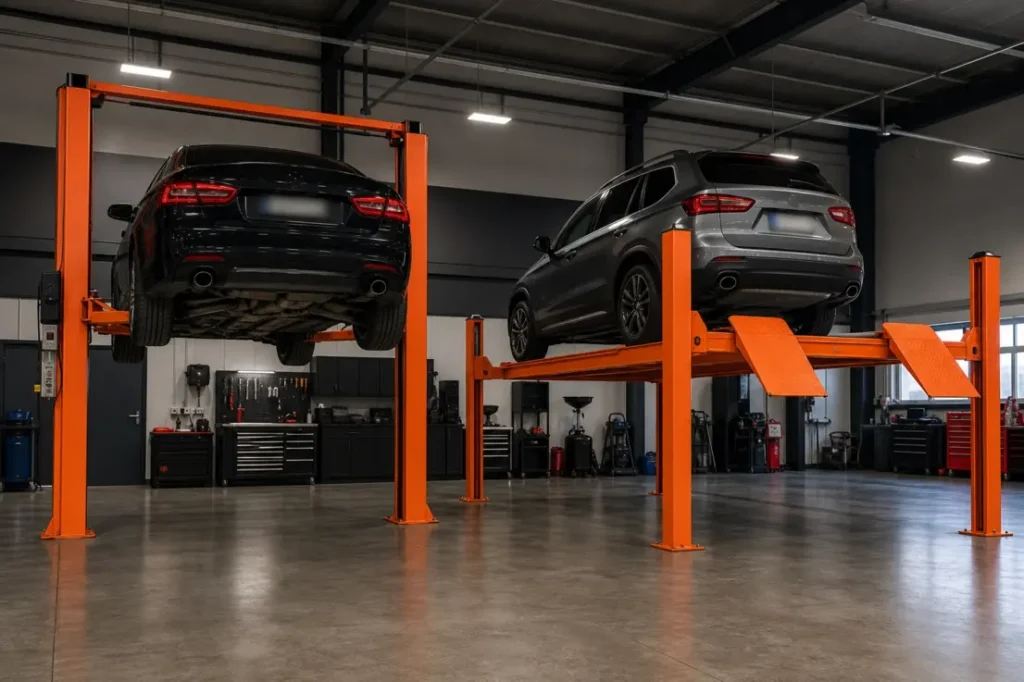
If you're shopping for a car lift, you've probably noticed there are a lot of options and you want to find out what the differences are. This 2026 guide breaks down the different types of car lifts in plain English, so you can match the right lift to your shop, your vehicles, and your floor.
Direct Answer
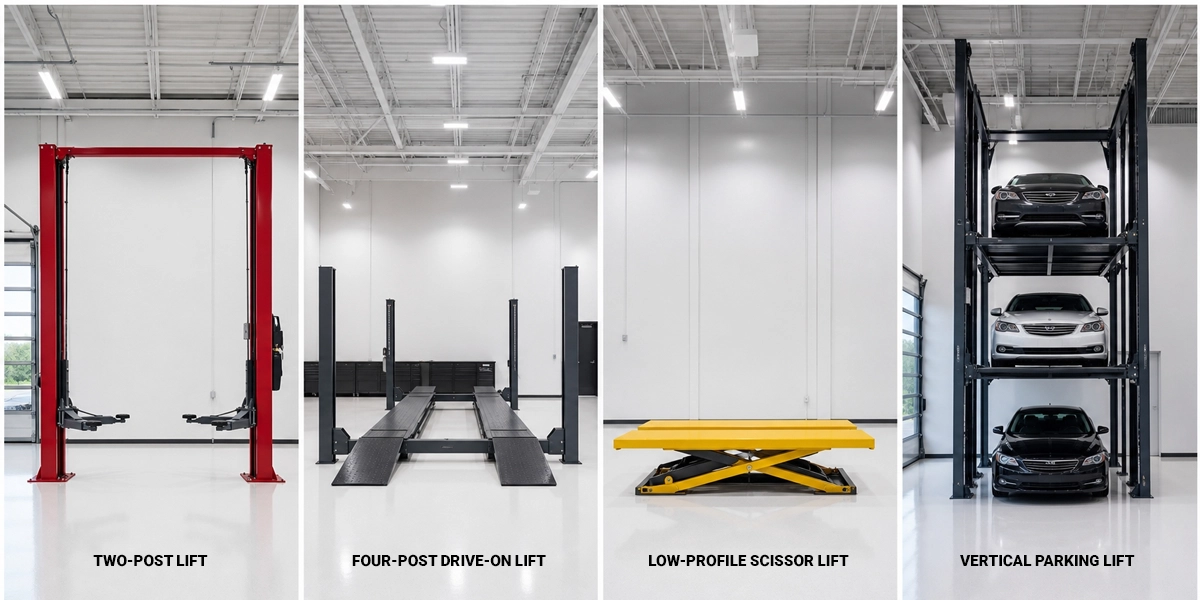
There are eight main types of car lifts used in North American shops and garages: 2-post lifts, 4-post lifts, scissor lifts, alignment lifts, parking lifts, portable lifts, in-ground lifts, and mobile column lifts. Lifts either grab the vehicle by its frame (2-post, scissor, some in-ground) or hold it by its wheels (4-post, parking, mobile column, most alignment). Your best pick depends on what you plan on doing, what you'll service, your ceiling height, your concrete slab, and your budget.
All Car Lift Types Compared at a Glance
Here's a quick side-by-side of the main types of automotive lifts. Use it as a shortcut before you read the full breakdown below.
| Lift Type | How It Lifts | Typical Capacity | Best For | Footprint |
|---|---|---|---|---|
| 2-Post Lift | Frame | 9,000–15,000 lb | Brakes, suspension, exhaust, full undercarriage work | Compact |
| 4-Post Lift | Wheel (drive-on) | 9,000–24,000+ lb | Alignments, storage, heavy trucks, easy loading | Large |
| Scissor Lift | Frame or wheel | 6,000–12,000 lb | Tire, brake, and quick service in low-ceiling shops | Small, low profile |
| Alignment Lift | Wheel (drive-on) | 12,000–35,000 lb | Wheel alignments with slip plates and turntables | Large |
| Parking Lift | Wheel (drive-on) | 6,000–10,000 lb | Stacking two vehicles in one bay for storage | Medium–Large |
| Portable Lift | Frame | 3,500–7,000 lb | Tight spaces, light service, mobile work | Very small |
| In-Ground Lift | Frame or wheel | 9,000–18,000+ lb | High-volume shops that want a clear floor | Hidden in slab |
| Mobile Column Lift | Wheel (forks) | Per column, multi-column setups | Buses, trucks, fleet shops, heavy duty work | Wherever you set it |
Note that these are general planning ranges across the industry, not specs for any one model. Capacities, sizes, and features vary by manufacturer.
How Do Car Lifts Work? Wheel Lifting vs. Frame Lifting
Before we dig into the types of car lifts, it helps to know one big thing: how a lift grabs the vehicle. This is the single most important thing to know before making a purchase.
Quick Definition
Frame-engaging lifts use swing arms or pads that push up under the vehicle frame, leaving the wheels hanging free thus allow for mechanics to work on brake, tire, and suspension work.
Wheel-engaging lifts use runways or platforms for the vehicle to drive onto. The tires remain stationary at all times. This type of lift is Great for storage, alignments, and heavy trucks.
That single distinction explains a lot. If you mostly do brake and suspension work, you'll want wheels-free access so a 2-post lift or scissor lift makes sense. If you mostly park, store, or align cars, a drive-on 4-post is usually the better fit.
The 8 Main Types of Car Lifts Explained
Now let's break down each lift type one at a time. We'll cover what it is, what it's good at, and where it falls short.
1. Two-Post Car Lifts (Frame-Engaging)
The two post car lift is the workhorse of most professional shops. Two tall columns sit on either side of the vehicle. Four swing arms reach under the frame and lift the car straight up.
Because the wheels hang free, you get full access to brakes, tires, suspension, exhaust, the whole underside. That's why 2-post lifts dominate general repair work.
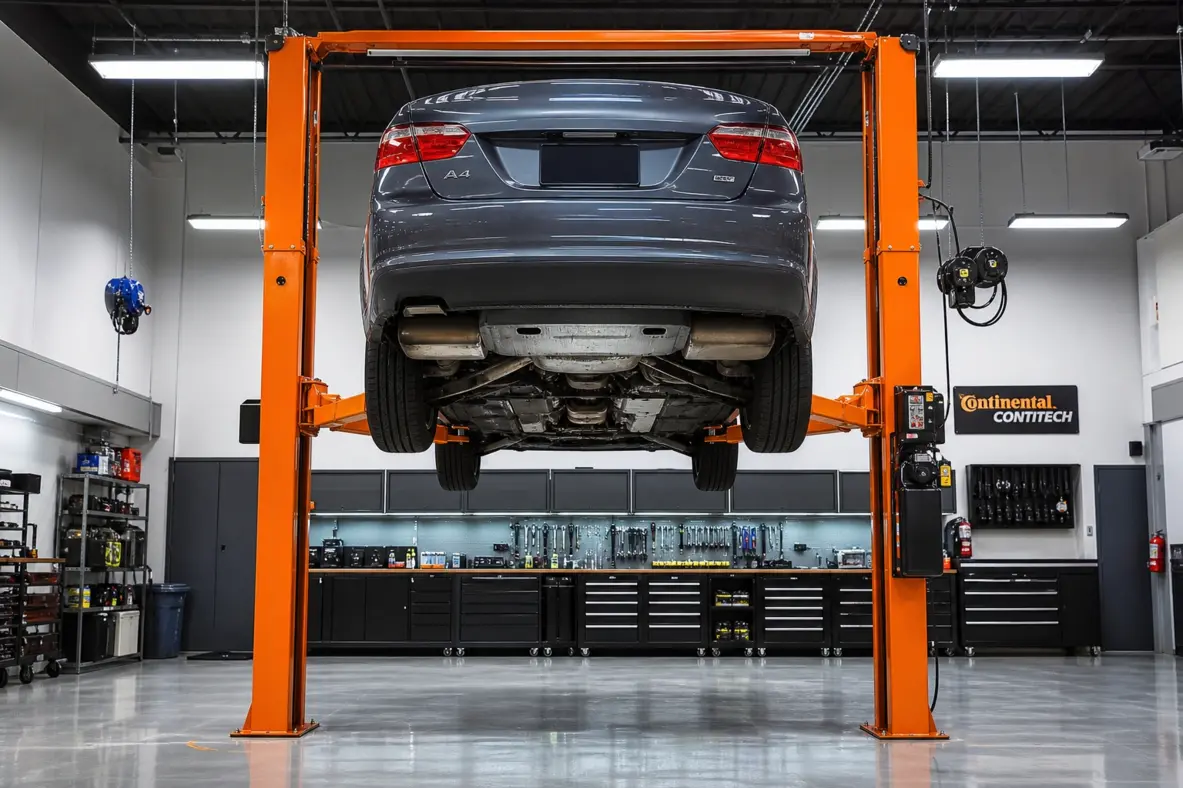
You can see Daytona's full lineup on the 2-post lifts category page. Capacities run from 9,000 lb to 15,000 lb.
Symmetric vs. Asymmetric 2-Post Lifts
Two-post lifts come in two main styles. Here's the symmetric vs asymmetric car lift difference in plain English:
| Style | Arm Setup | Best For |
|---|---|---|
| Symmetric | All four arms the same length. Posts face each other directly. | Heavier, longer vehicles like trucks and vans where weight needs to be split evenly. |
| Asymmetric | Shorter front arms, longer back arms. Posts rotated slightly. | Cars. Lets the driver open the door even when the car is raised. |
Overhead vs. Floor Plate (Clear Floor) Lifts
Two-post lifts also split into two designs based on where the cables and hoses run:
- Overhead (clear floor) a crossbar at the top connects the two columns. The floor between the posts is clear. Great if you have the ceiling height. Daytona's BR10-2OH-33 and LTPO15 are overhead designs.
- Floor plate — a steel plate runs across the floor between the posts. No overhead bar. Perfect when your ceiling is too low for an overhead model. Daytona's LTPF9 and LTPF12 are floor plate designs.
That floor plate vs clear floor lift choice almost always comes down to ceiling height. Ensure you have the right measurement of your garage space.
2. Four-Post Car Lifts (Wheel-Engaging)
A four-post lift uses four columns and two long runways. You drive the vehicle onto the runways, and the lift raises it by the tires.
Because the load spreads across four columns, 4-post lifts handle higher capacities than most 2-posts. Many heavy-duty truck hoist lift setups are 4-post designs.
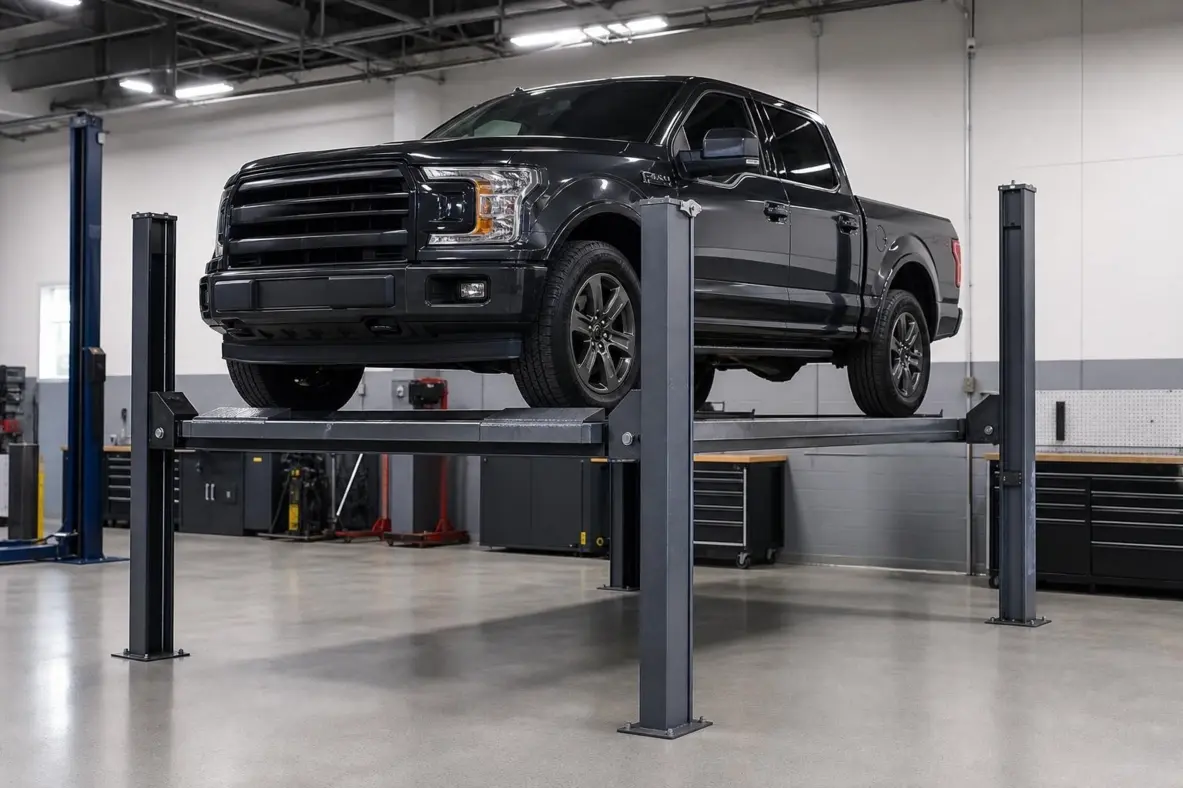
4-posts are also popular for home garages because most don't need to be anchored to the floor. Add a caster kit (wheels to the base), and the whole thing rolls.
The trade-off: the tires are on the runways, so you can't easily work on wheels or brakes without a rolling jack. Daytona offers rolling jacks sized for our 4-post lifts to solve this very issue if you plan on getting a 4 post lift or already own one.
Browse Daytona's 4-post lifts and parking lift lineup.
3. Scissor Lifts (Low, Mid, and High-Rise)
A scissor car lift raises the vehicle using an accordion-style mechanism under runways or pads. When lowered, it sits very flat. When raised, the X-shaped legs scissor outward.
Scissor lifts come in three height classes:
- Low-rise: lifts up to about 36 inches off the ground. Good for tire, brake, and quick body work.
- Mid rise scissor lift: typically 36 to 48 inches. Great for many service jobs without needing high ceilings.
- Full-rise / high-rise: raises high enough to stand under, similar to a 2-post.
For shops with low ceilings or tight spaces, scissor lifts are a smart pick. Daytona's LMS6 mid-rise and LHS7 high-rise are both popular options. See the full scissor lifts category for specs.
4. Alignment Lifts
An alignment lift is a 4-post lift built specifically for wheel alignments. The runways include built-in slip plates and turntables so the wheels can turn freely while the technician adjusts toe, camber, and caster.
If your shop does alignments, this is the lift. If you don't, skip it — a regular 4-post is usually cheaper and just as useful for storage.
Daytona builds alignment lifts from 12,000 lb up to a heavy-duty 35,000 lb model. Check the alignment lifts page or the LFPA14 14,000 lb model for a popular shop pick.
Note: wheel alignment machines and rolling jacks are sold separately from the lift itself.
5. Parking Lifts
Parking lifts let you store two vehicles in the space of one. You park one car on the lift, raise the lift and park another car underneath, and you've doubled your space.
These are popular with home enthusiasts, dealerships, and packed urban parking facilities. They're not really meant for repair work (since their design obstructs you) the focus is storage.
Daytona offers parking lifts from 9,000 to 10,000 lb capacity. The LFPP10-XLT is built extra long and extra tall (85" clearance) for full-size trucks and SUVs.
6. Portable Car Lifts
Portable lifts are the smallest, most flexible option. Some use a pair of small columns. Others are jack-style units you slide under the car.
They're great for tight garages, mobile mechanics, and light service. The trade-off is capacity — most portable lifts handle smaller, lighter vehicles only. Don't try to put a one-ton truck on a 3,500 lb portable lift.
If you're a shop that services all vehicles then this is not a first choice lift for you, a portable lift is usually a backup tool, not your main lift.
7. In-Ground Car Lifts
In-ground lifts install below the floor. When not in use, they retract into the slab, leaving a clear shop floor.
They're great for high-volume shops that need clean space and a polished look. They can be frame-engaging or wheel-engaging depending on the model. Some single-column versions (sometimes called a 1 post lift) work well for specialty service like Porsche or low-clearance sports cars.
The downside is installation. You're cutting concrete, prepping a pit, and dealing with hydraulic systems below grade. According to the Automotive Lift Institute, in-ground lifts also require environmental safeguards in many regions.
For most shops, an above-ground lift is simpler and cheaper.
8. Mobile Column Lifts
Mobile columns are wheeled lifting columns that team up to raise heavy vehicles. Need to lift a bus? Roll four columns into place, sync them up, and lift all four wheels at once. Need more capacity? Add more columns.
These are the standard for fleet shops, transit garages, and heavy truck service. They're powerful and flexible, but priced for commercial users. Most home garages will never need one.
Drive-On Parallelogram Lifts: A Special Case
A drive on parallelogram lift looks a bit like a 4-post and a bit like a scissor lift. You drive onto the runways, but the lift raises the vehicle slightly forward or backward as it goes up — not straight up.
That extra movement is useful in alignment shops because it can preserve the geometry of the vehicle. It's less common than a standard 4-post but worth knowing about if you're shopping for alignment equipment.
2-Post vs. 4-Post Lift: Which Should You Choose?
This is the most common car lift question in North America. The short answer: it depends on what you'll actually do with it.
| Factor | 2-Post Lift | 4-Post Lift |
|---|---|---|
| Best for | Brakes, suspension, exhaust, tires, general repair | Storage, alignments, heavy trucks, easy drive-on use |
| Vehicle engagement | Frame (wheels hang free) | Wheels (tires on runway) |
| Floor anchoring | Required | Usually not required |
| Concrete needs | Stronger slab, anchor depth matters | Lower demand on slab |
| Loading the vehicle | Position carefully on swing arms | Just drive on |
| Footprint | Smaller | Larger |
| Storage stacking | No | Yes |
| Cost | Usually less | Usually more for similar capacity |
The 2 post lift vs 4 post lift debate isn't really about which is "better." It's about which is right for your work. Doing wheel and brake jobs all day? Go 2-post. Storing a second car or doing alignments? Go 4-post.
Daytona Team Tip: The Most Common Buying Mistake
"We see shop owners pick the 'most popular' lift instead of the right lift. A 2-post is the most common, but if your ceiling is under 11 feet, or you mostly need storage, it's the wrong tool. Measure your ceiling, check your slab, and pick the lift that matches the work not the lift you saw on YouTube."
— The Daytona Automotive Equipment Team
How to Choose the Right Car Lift for Your Shop or Garage
Here's a simple framework we use with customers. Match your use case to a lift type, then narrow by capacity, ceiling, and floor.
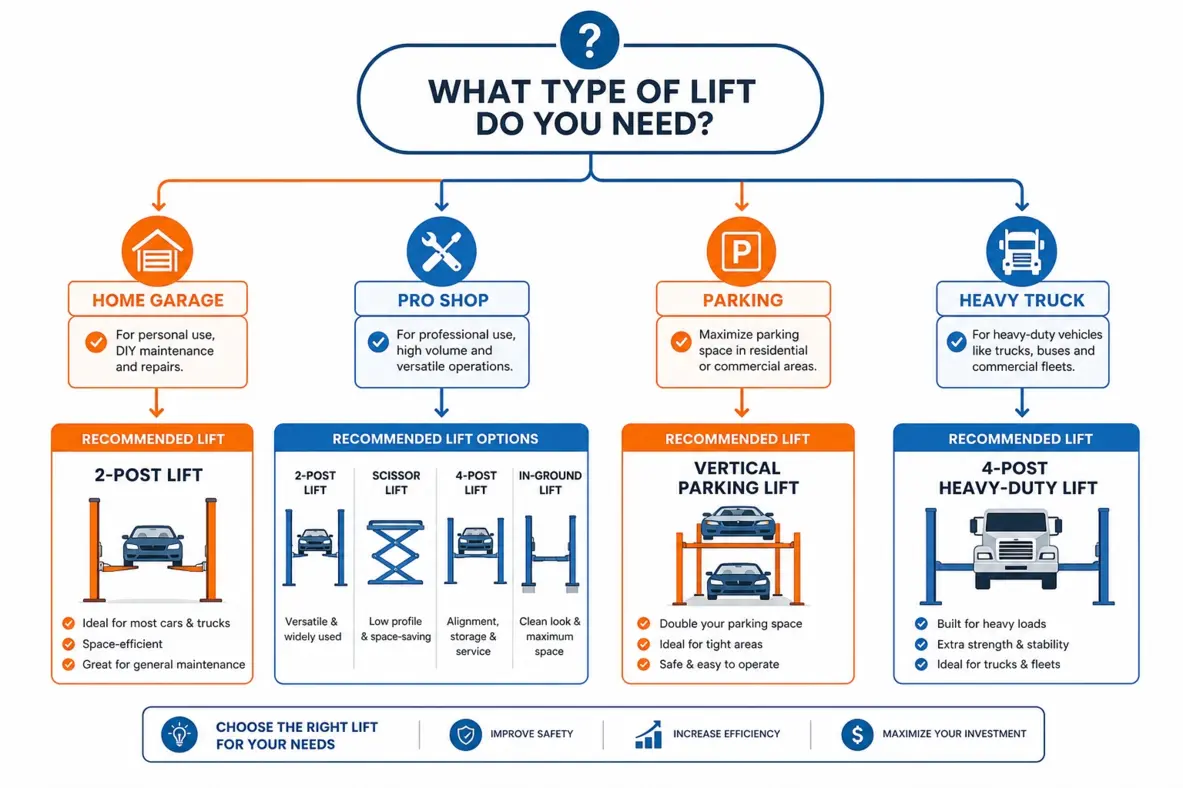
| Your Use Case | Best Lift Type(s) | Why |
|---|---|---|
| Home garage, mainly repairs | 2-post lift | Full wheels-free access for brake, tire, and suspension work. |
| Home garage, low ceiling | Mid-rise scissor lift or floor plate 2-post | No overhead bar, lower lift height. |
| Home garage, mainly storage | 4-post parking lift | Stacks two vehicles in one bay, no anchoring needed. |
| Pro repair shop | 2-post lift (multiple bays) | Industry standard for daily repair work. |
| Alignment shop | 4-post alignment lift | Built-in slip plates and turntables. |
| Tire shop or quick service | Scissor lift | Fast up and down, small footprint. |
| Heavy trucks and fleets | Mobile column lifts or heavy-duty 4-post | Higher combined capacities for buses and class 7–8 trucks. |
| Motorcycle / ATV shop | Motorcycle / ATV lift | Sized and shaped for two-wheel and quad service. See the Daytona LMATV. |
| Multi-vehicle parking facility | Parking lifts | Double the cars per square foot. |
If you want to compare specs side by side, you can download the Daytona brochure for full and condensed catalogs.
What About ALI Certification?
ALI stands for the Automotive Lift Institute. ALI Certification means an independent lab has tested the lift and confirmed it meets the safety and performance standards laid out in ANSI/ALI ALIS.
It's the gold standard in North America. You can learn more on the ALI certification program page.
Daytona and ALI Certification
The Daytona BR10-2OH-33 10,000 lb overhead 2-post lift is our ALI Certified model. It's the only Daytona lift with this certification. For our other models, we focus on built-in safety features — automatic locks, single-point release, aircraft-quality cables, and the 5-2-1 Limited Warranty (5 years structural, 2 years power units, 1 year parts, with stated exclusions).
Ceiling Height and Concrete: The Two Things People Forget
Before you pick a lift, check two things in your shop or garage.
Ceiling height. An overhead 2-post lift typically needs 11 to 12 feet of clearance. A floor plate 2-post can fit in 10 feet. A mid-rise scissor lift can fit in much less. If you ignore ceiling height, you'll end up with a lift you can't fully use.
Concrete slab. 2-post lifts concentrate load at two anchor points. Most require at least 4 to 4¼ inches of cured 3,000 PSI concrete, with 6 inches reinforced preferred for new pours. 4-post and parking lifts spread the load and are easier on the floor — but you still need a solid slab.
| Lift Type | Ceiling Height (general planning) | Concrete Slab (general planning) |
|---|---|---|
| 2-Post Overhead | ~11–12 ft | 4–6 in, 3,000+ PSI, anchored |
| 2-Post Floor Plate | ~10 ft | 4–6 in, 3,000+ PSI, anchored |
| 4-Post Lift | ~11–12 ft (model dependent) | Solid, level slab (often un-anchored) |
| Mid-Rise Scissor | ~8–9 ft | Solid level slab, model dependent |
| Parking Lift | Match to vehicle + clearance | Solid level slab |
| Alignment Lift | ~11–12 ft (model dependent) | Solid, level slab |
These are general planning numbers, not a substitute for the installation manual that ships with each lift. Always follow the manual.
Daytona's Car Lift Lineup at a Glance
If you're looking for car hoists or automotive vehicle hoists from a Canadian-owned brand serving the US and Canada since 1999, here's where Daytona fits in each category.
| Category | Daytona Models | Capacity Range |
|---|---|---|
| 2-Post Lifts | BR10-2OH-33 (ALI Certified), LTPO15, LTPA10, LTPA12, LTPF9, LTPF12 | 9,000–15,000 lb |
| 4-Post Parking Lifts | LFPP9, LFPP10, LFPP10-XLT | 9,000–10,000 lb |
| Alignment Lifts | LFPA12, LFPA14, LFPA24, LFPA35 | 12,000–35,000 lb |
| Scissor Lifts | LMS6 (mid-rise), LHS7 (high-rise) | 6,000–6,600 lb |
| Motorcycle / ATV Lifts | LMATV | 2,200 lb |
Every Daytona lift is built for indoor use only and backed by our 5-2-1 Limited Warranty with stated exclusions (electronic parts and wearing parts like cables, hoses, slider blocks, chains, gears, and rubber pads are not covered). Daytona is a Canadian-owned brand serving the US and Canada — we don't ship outside those markets.
Whether you're outfitting a home garage, a busy repair shop, or a parking facility, the right lift makes the work safer, faster, and easier. Pick the type that matches your work, your ceiling, and your slab — and you'll be set for years.
Not Sure Which Car Lift Is Right for You?
Daytona Automotive Equipment builds 2-post, 4-post, scissor, alignment, parking, and motorcycle/ATV lifts for shops and garages across the US and Canada.
- Lifts from 2,200 lb up to 35,000 lb capacity
- ALI Certified option available: BR10-2OH-33
- Overhead and floor plate designs for low ceilings
- 5-2-1 Limited Warranty with clear terms
- Canadian-owned and operated since 1999
- Distributor and installer opportunities open in the US and Canada
Tell us about your shop, your slab, and your vehicles — we'll help you pick the right lift.
Request a Lift Quote