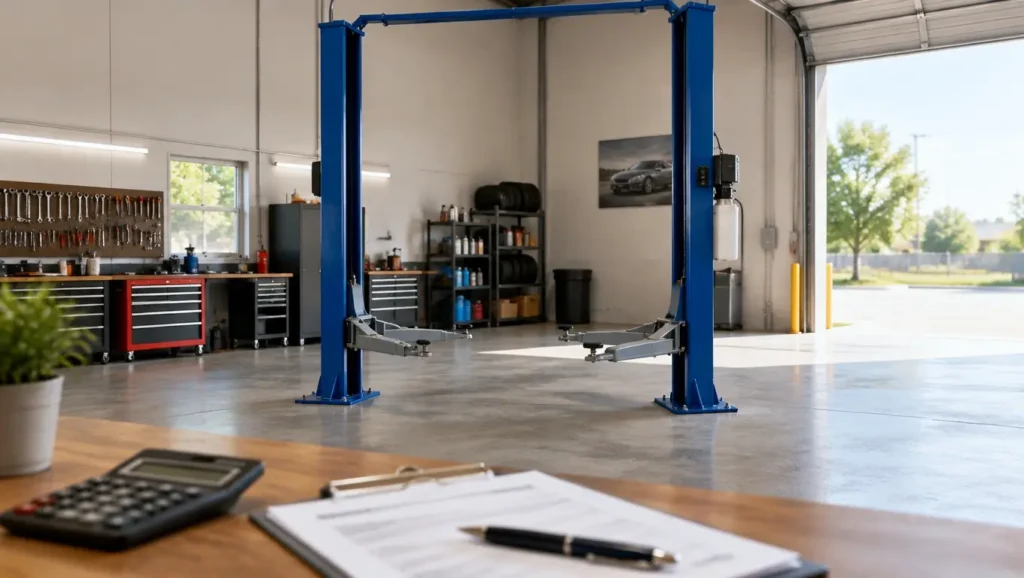
Car lift financing lets you pay for a lift over time through an equipment loan or an equipment lease instead of one upfront payment. A third-party lender covers the cost, then you repay in fixed monthly installments, commonly over 24 to 72 months, while the lift is already earning its keep on your shop floor.
Daytona works with two named lenders: NewLane Finance in the United States and Active Growth Financial in Canada. We are not a lender ourselves, and we do not set rates or terms.
Here's the thing about buying a lift outright: most shops don't have five figures of free cash sitting in a business account, and even the ones that do often shouldn't spend it that way. That's why a complete car lift project so often gets paid for with financing rather than a single check.
We sell through distributors and installers across the US and Canada, and financing questions come up in almost every quote conversation. This guide walks through how car lift financing actually works, what a lender is really evaluating, and how the tax side differs depending on which side of the border your shop sits on.
Key takeaways
- Financing is a lender relationship, not a Daytona product. We connect qualified buyers with NewLane Finance in the US and Active Growth Financial in Canada, and each lender sets its own rates and terms.
- A financed amount usually covers more than the lift. Freight, electrical work, and installation labor can often be rolled into the same financed total.
- Loan and lease are not the same thing. A loan or Equipment Finance Agreement builds ownership from day one. A lease often means lower payments but a decision to make at the end of the term.
- If you're keeping the lift long term, ownership structures usually win. Many Daytona lifts stay in service well past 15 years, which changes the lease-versus-loan math.
- Tax treatment differs by country. The US uses Section 179 and bonus depreciation. Canada uses the Capital Cost Allowance system. Neither is a substitute for advice from your own accountant.
- Approval speed is often faster than people expect. NewLane Finance reports credit decisions in as little as one to two hours for qualifying applications.
How does car lift financing work?
Car lift financing lets a shop pay for a lift over time instead of upfront, through either an equipment loan or an equipment lease. A lender pays the equipment cost to the seller, and the buyer repays it in fixed monthly installments, commonly over 24 to 72 months, while the lift is already in use and generating revenue.
That structure is what makes financing appealing for equipment specifically. Unlike financing a car for personal use, an auto shop equipment loan is financing an asset that starts paying for itself the same week it's bolted to the floor.
The lender's decision usually comes down to a handful of factors: your credit profile, how long you've been in business, your revenue, and the value of the equipment itself, since the lift often serves as collateral. We cover exactly what lenders weigh in the qualification section below.
What actually gets covered by a financed amount?
A common assumption is that financing covers the lift and nothing else. In practice, most lenders will finance the complete equipment invoice, and that invoice is rarely just the lift.
Our full car lift cost breakdown uses a framework we call the Five F's: Fixture, Freight, Floor, Feed, and Fitting. Fixture is the lift itself. Freight is delivery. Floor is any concrete work your slab needs. Feed is the electrical circuit. Fitting is installation labor.
Lenders will typically finance Fixture, Freight, and Fitting as part of one equipment invoice, since those are all tied directly to putting the lift into service. Floor work (concrete) and Feed (electrical) are sometimes financed too if they appear on the same vendor invoice, but a lender may treat them as a separate line item if a different contractor bills for them.
Pro tip: get one consolidated quote
If you want freight and installation rolled into your financed amount, ask your distributor for one combined invoice rather than three separate bills. A single invoice is easier for a lender to evaluate and speeds up approval.
Equipment loan or lease: which fits your shop?
An equipment loan or Equipment Finance Agreement builds ownership from the first payment, while a true lease usually means lower monthly payments but a decision to make when the term ends. Neither is universally better. It depends on how long you plan to keep the lift.
Equipment Finance Agreement (EFA)
An EFA works like a loan. You take ownership of the lift right away, the lender holds a security interest in it until it's paid off, and your payments are fixed for the term. This is the most common structure for shops that know they're keeping the equipment.
Dollar buyout lease
A dollar buyout lease is structured as a lease for accounting purposes but functions almost identically to a loan. At the end of the term, you buy the equipment for one dollar, since you were always the intended owner. Payments are usually close to what an EFA would cost.
True lease (fair market value lease)
A fair market value lease, sometimes called a true lease, typically carries the lowest monthly payment of the three structures. At the end of the term, you choose to return the lift, renew the lease, or buy it at its current market value, which is not fixed in advance.
| Structure | Who owns it during the term | End of term | Best fit |
|---|---|---|---|
| Equipment loan / EFA | You, with a lender lien | Loan is paid off, lien released | Shops that know they are keeping the lift for its full working life. |
| Dollar buyout lease | Lessor, on paper | Buy for one dollar | Shops that want loan-like ownership but prefer lease accounting treatment. |
| Fair market value (true) lease | Lessor | Return, renew, or buy at market value | Shops that may upgrade or change equipment before the lift's useful life ends. |
Key takeaway: match the structure to how long you'll keep the lift
Daytona lifts commonly stay in service for 15 years or more when maintained on schedule. If you already know you're keeping the equipment that long, an EFA or dollar buyout lease usually costs less over the full term than a true lease built around flexibility you won't use.
What do lenders look for in an application?
Equipment lenders are evaluating risk on both sides: your business and the asset itself. A vehicle lift is generally considered strong collateral, since it holds resale value and rarely becomes obsolete the way computer equipment does.
That said, your business profile still matters most. Time in business, credit history, and revenue all factor into approval and into the rate you're offered.
| Factor | Why it matters | What strengthens an application |
|---|---|---|
| Time in business | Longer-running shops carry a track record a lender can evaluate. | Two or more years in operation, though newer shops can still qualify. |
| Credit profile | Personal and business credit history informs both approval and rate. | A clean recent payment history on existing credit and debt obligations. |
| Revenue and cash flow | Lenders want confidence the monthly payment fits your cash flow. | Recent bank statements or financial statements showing stable revenue. |
| Equipment type and value | A durable, resalable asset like a lift is easier to finance than consumables. | A finalized equipment quote or invoice rather than a rough estimate. |
How do you apply for lift financing?
The process is similar across most equipment lenders, including Daytona's own financing partners. It generally runs in four steps.
First, get your equipment quote finalized with your distributor, including freight and installation if you want those rolled in. Second, submit a financing application, usually a short form covering your business and basic financials. Third, the lender reviews your application and returns a decision along with the specific rate and term you qualify for. Fourth, once you accept and sign, funding is released and the equipment order moves forward.
According to NewLane Finance, which is backed by WSFS Bank, credit decisions can come back in as little as one to two hours, with funding often available within 24 to 48 hours of approval. Active Growth Financial states on its own FAQ page that a specialist typically responds to inquiries within one business day.
Ready to talk financing for your next lift? Get a quote on your equipment first, then connect with the lender that serves your country.
See Financing OptionsCan you deduct a financed lift on your taxes?
Often yes, in both the US and Canada, but the mechanism is different in each country and the details depend on your specific situation. This section explains the general framework. It is not tax advice.
Section 179 in the United States
The Section 179 deduction lets a qualifying business deduct the full purchase price of eligible equipment in the year it's placed in service, rather than depreciating it over several years. According to the IRS Publication 946 and current Section 179 guidance, the maximum deduction for tax years beginning in 2026 is $2,560,000, with the deduction phasing out once total qualifying purchases exceed $4,090,000.
Financed equipment still qualifies. The deduction is based on the full purchase price, not on how much cash you put down, as long as the lift is placed in service and used more than half the time for business.
Capital Cost Allowance in Canada
Canada uses a different system called Capital Cost Allowance, or CCA, administered by the Canada Revenue Agency. Rather than one full write-off in year one, most equipment is deducted gradually at a fixed percentage each year, following the CCA class it falls into.
According to the Canada Revenue Agency's CCA classes guidance, most general machinery and equipment, including many types of shop equipment, falls into Class 8 at a 20 percent declining balance rate, and a half-year rule usually applies in the year of purchase.
Common mistake: treating this as tax advice
Whether Section 179, bonus depreciation, or CCA Class 8 applies to your specific lift purchase depends on your business structure, your usage, and your jurisdiction. Confirm your situation with a qualified accountant before you file, and before you assume a specific deduction amount.
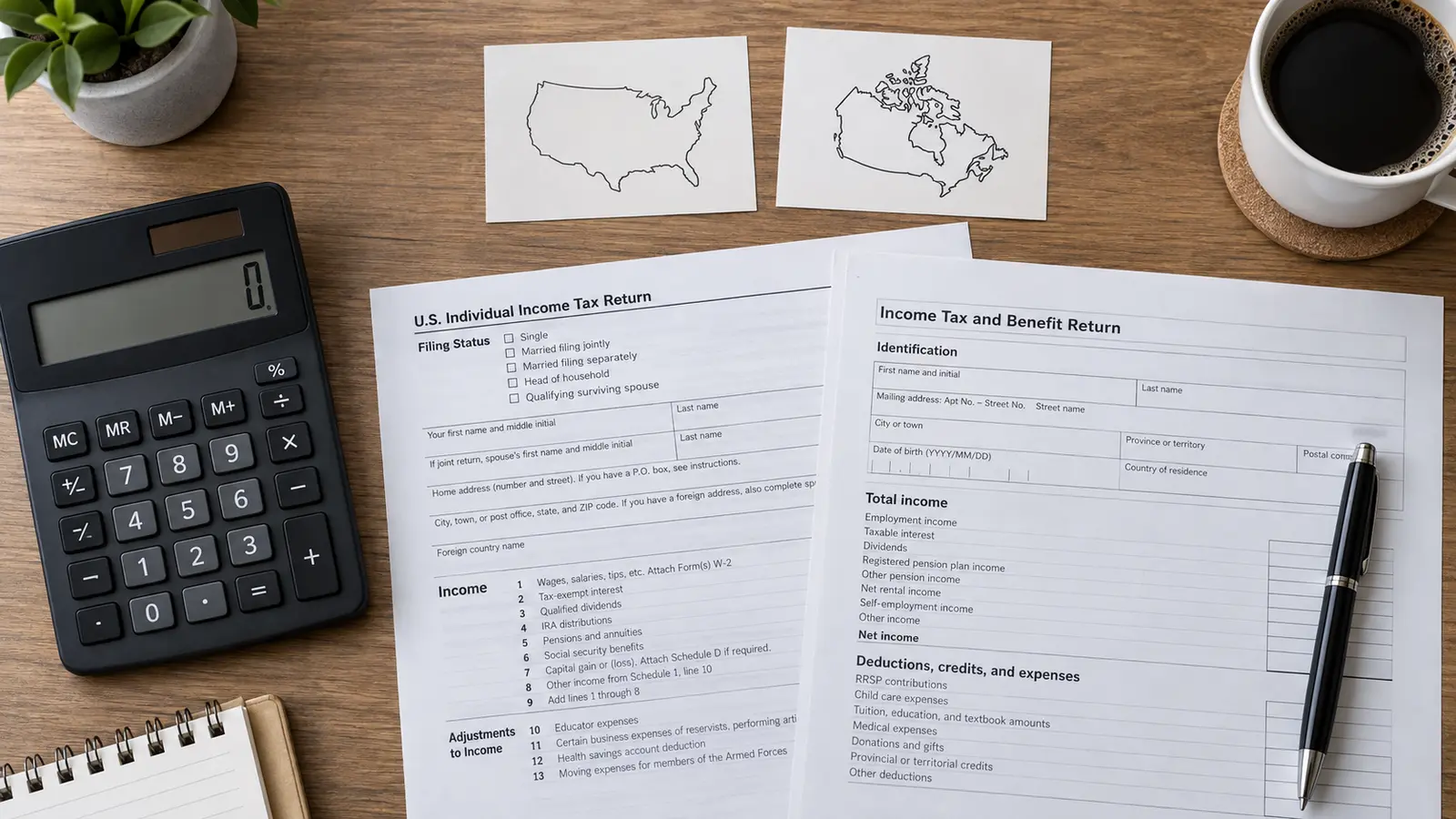
Financing a lift in Canada versus the US
The financing process is similar on both sides of the border, but the lender, the currency, and the tax treatment all differ. Knowing which lane you're in before you apply saves a round of back-and-forth.
| Factor | United States | Canada |
|---|---|---|
| Daytona's financing partner | NewLane Finance, backed by WSFS Bank | Active Growth Financial |
| Primary tax mechanism | Section 179 deduction, plus bonus depreciation | Capital Cost Allowance, Class 8 for most equipment |
| Typical treatment | Full purchase price deductible in year one, up to the annual cap. | 20 percent declining balance annually, with a half-year rule at purchase. |
| Currency | US dollars | Canadian dollars |
A worked example: financing a two-post lift
We see this scenario constantly across our distributor network, so it's worth walking through in plain terms, without pinning it to specific numbers that will vary by lender and region.
A shop owner in the southern US is replacing an aging lift with one of our two-post lift models. Rather than paying cash, they finance the equipment invoice, which includes the lift, freight, and installation, through an Equipment Finance Agreement. Because they plan to run the lift for the long haul, ownership from day one matters more to them than a lower monthly payment.
Meanwhile, a shop owner in Ontario is going through the same decision with the same model, but through Active Growth Financial and under Canada's CCA system instead of Section 179. The lift itself doesn't change. The lender, the currency, and the tax mechanics do.
In both cases, our 5-2-1 warranty covers the financed asset the same way it would a cash purchase, including 5 years of structural coverage, so the financing decision doesn't affect what's protected.
Where does Daytona fit into the financing process?
We want to be direct about our role here. Daytona Automotive Equipment is a manufacturer, not a lender. We do not originate financing, we do not service loans or leases, and we are not a party to any financing agreement you sign.
What we do is connect qualified US and Canadian buyers with two financing partners we've vetted: NewLane Finance for US customers, and Active Growth Financial for Canadian customers. NewLane is backed by WSFS Bank, an institution with nearly 200 years of operating history, and reports having financed more than 31,000 companies to date. Active Growth Financial finances a wide range of business equipment categories and responds to inquiries through its own online form.
Approval decisions, interest rates, and repayment terms are set entirely by whichever lender you work with. We recommend comparing the terms you're offered against your own numbers before you sign, the same way you'd evaluate any other business financing.
| Question | Equipment Finance Agreement | Fair market value lease |
|---|---|---|
| Who owns the lift at signing | You, subject to the lender's lien | The lessor |
| Typical monthly payment | Higher than a true lease | Lower than an EFA |
| End of term | Lien released, you own it outright | Return, renew, or buy at market value |
Talk to a financing partner about your next lift
Get your equipment quote finalized, then connect with the lender that serves your country. We'll help you get the right invoice in front of the right lender.
- US customers. NewLane Finance, backed by WSFS Bank, with credit decisions often available in one to two hours.
- Canadian customers. Active Growth Financial, financing a broad range of business equipment.
- Daytona's role. We connect you with vetted partners. We are not a lender and are not a party to your financing agreement.
- 5-2-1 warranty. Every lift carries the same warranty coverage whether you pay cash or finance.
About the author
The Daytona Team
Written by the team at Daytona Automotive Equipment, a Canadian-owned manufacturer of automotive lifts, tire changers and wheel service equipment since 1999.
- Specializations. Two-post, four-post, alignment, parking and scissor lifts from 2,200 lb to 35,000 lb, plus wheel service equipment and lift accessories.
- Financing role. Daytona is not a lender. We connect qualified US and Canadian buyers with NewLane Finance and Active Growth Financial.
- Reviewed by. Daytona product and customer care staff, September 2026.
Daytona Automotive Equipment Inc. · Brighton, ON, Canada · Automotive lifts, tire changers and wheel service equipment since 1999.
References and sources
- Internal Revenue Service. Publication 946, How To Depreciate Property. IRS, accessed September 2026.
- Canada Revenue Agency. Capital cost allowance (CCA) classes. Government of Canada, accessed September 2026.
- NewLane Finance. Equipment financing overview. NewLane Finance, accessed September 2026.
- Active Growth Financial. Equipment financing FAQs. Active Growth Financial, accessed September 2026.
This article is for general educational purposes only and is not financial, legal, or tax advice. Financing terms, rates, and eligibility are set solely by the third-party lender and are subject to change. Daytona Automotive Equipment is not a lender and is not a party to any financing agreement. Confirm your specific tax treatment with a qualified accountant before you file.